


Pug Dog as a Pet
Considerations before Commitment
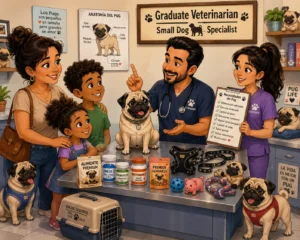
A family Pug Dog requires indoor housing with air conditioning, constant access to clean water, and strictly portion-controlled food to prevent obesity and breathing complications – because they are a flat-faced dog breed, a Pug Dog’s specialized care revolves around temperature regulation and weight management.
- Housing and Environment
Pug Dog as a Pet
Pug Dogs are entirely indoor dogs and cannot tolerate extreme temperatures due to their shortened airways – as owner you must ensure:
- Climate Control:
- A Pug Dog must live in a temperature-controlled home with reliable air conditioning during summer – overheating can be fatal
- Joint-Friendly Bedding:
- Provide supportive, low-to-the-ground orthopedic dog beds to protect their joints
- Safety Ramps: Use small pet stairs for furniture to prevent back injuries from jumping
- Family Inclusion:
- Place their sleeping area in a central living space.
They are highly social “velcro” lap dogs.
- 2. Water Requirements
Pug Dog as a Pet
Pugs pant deeply to cool down, causing them to lose body moisture faster than long-nosed breeds.
Daily Volume:
- Provide roughly 1.25 ounces of water per pound of body weight daily (e.g., 20–25 ounces for a 18-lb Pug)
- Constant Access:
- Leave multiple clean bowls out 24/7; never restrict water except overnight during puppy potty training
- Travel Supply:
- Always carry a portable water bottle on walks, even in mild weather
- Bowl Maintenance:
- Use wide, shallow stainless steel or ceramic bowls. Clean them daily to prevent bacteria from building up in their facial wrinkles
- Food and Diet Rules
Pug Dogs as a Pet
Pug Dogs have no internal “full” switch – a Pug Dog will easily eat themselves into dangerous obesity.
- Daily Portions:
- Adult Pugs typically only need 1/2 to 3/4 cups of high-quality dry kibble per day – split into two meals
- Kibble Shape:
- Choose small-breed formulas with uniquely shaped kibble that flat-faced dogs can easily pick up
- Strict Schedule:
- Avoid free-feeding or leaving food out. Feed at exact times to regulate digestion and weight
- Wrinkle Care:
- Wipe their facial folds dry with a damp cloth immediately after meals to prevent skin fold dermatitis from trapped food particles
- Treat Limits:
- Account for training treats within their daily calorie budget. Use low-calorie alternatives like green bean
- Important Health Considerations
Pug Dogs as a Pet
Before purchasing a Pug Dog, it is important to understand that Pug Dogs are a brachycephalic (flat-faced) breed.
Common concerns include:
- Breathing difficulties, especially in hot weather
- Increased risk of heatstroke
- Eye injuries because of their prominent eyes
- Skin infections in facial wrinkles if not cleaned regularly
- Weight gain and obesity
- Possible spinal, hip, and knee problems.
Because of these health issues, veterinary expenses can sometimes be higher than expected.
- Living With a Pug
Pug Dogs as a Pet
A Pug Dog generally does best in a home where:
- Someone is home for much of the day
- Indoor temperatures are kept comfortable
- Daily walks are moderate rather than strenuous
- Children are taught gentle handling
- The dog is included in family activities.
Pugs are not ideal for families wanting a jogging companion or a dog that enjoys vigorous outdoor activity.
- Questions to Ask a Breeder
Pug Dogs as a Pet
If buying a Pug puppy, ask for:
- Health testing records for both parents
- Current and past Veterinary records
- Information about breathing health in the breeding line of this Pug Dog
- References from previous Pug puppy buyers
- A written health guarantee of the Pug’s health
- The opportunity to meet at least one current Pug Dog parent
Avoid breeders who always have Pug puppies available or who cannot provide proper health documentation.
- Consider Adult Rescue Pugs
Pug Dogs as a Pet
Many wonderful Pug Dogs can be adopted through rescue organizations – an adult Pug Dog often:
- Already has basic training
- Has an established personality
- May be calmer around young children
- Costs less than purchasing a puppy
- Is a Pug Right for Your Family
Pug Dogs as a Pet
- A Pug Dog can be an excellent family companion if your family wants:
- Loving indoor dog
- Moderate exercise needs
- A dog that enjoys cuddling and companionship
- A playful but generally easygoing temperament
- You may want to consider another breed if your family wants:
- A highly athletic dog
- A dog suited to hot climates
- A pet with fewer breed-related health concerns
- Why Families Love Pugs
Pugs are often described as affectionate, charming, and people-oriented dogs. They typically:
- Love being around their families and enjoy companionship.
- Are generally friendly with children when properly socialized.
- Adapt well to apartment or house living.
- Require less exercise than many larger breeds.
- Have playful, clown-like personalities that many children enjoy.
- Usually get along reasonably well with other pets.
For many families, a well-bred, healthy Pug Dog becomes a devoted companion that loves nothing more than being close to its owner family.
Your Emergency Photos/Video on
PeTrackers.com
Made finding your Lost Pug Dog Pet
Quicker and Easier to Find
And Happily Returned to You