



Fish as a Pet
Initial Aquarium Set-up
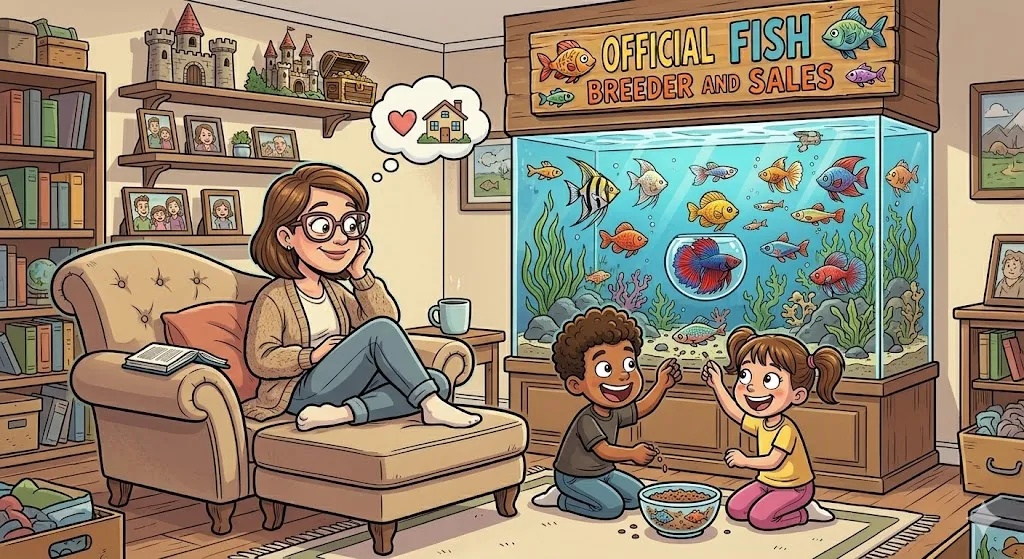
Fish as a pet can be a wonderful introduction to pet ownership for children – for a family with young children, a properly filtered freshwater aquarium of at least 20 gallons (75 litres) stocked with a small community of hardy tropical fish is often the easiest and most enjoyable way to start – the aquarium becomes both a pet habitat and an educational display that the whole family can enjoy.

- Initial Costs Can Be Higher Than Expected
Fish as a Pet
A proper Fish as a pet setup often includes:
- Aquarium cost depends upon size required
- Water filters
- Heater (for tropical species)
- Lighting for proper aquarium fish
- Water conditioner
- Gravel and decorations
- Fish food and testing kits
- Hardware & Equipment
Fish as a Pet
- Aquarium & Stand:
- Larger tanks (20 gallons) are easier to maintain than small bowls
- Because they hold more water
- Keep parameters stable
- Always use a stand rated for the weight of your tank
- Filter
- Keeps the water clear
- Hosts beneficial bacteria
- Hang-on-back or sponge filters are great for beginners
- Heater & Thermometer:
- Most community and tropical fish require a stable temperature
- Usually between 24°C and 26°C
- Use a reliable submersible heater
- A stick-on or digital thermometer
- Lighting:
- LED lights are vital if you want live plants
- LED lights provide a healthy day/night cycle for the fish
- Tank Lid/Hood:
- Prevents fish from jumping out
- Reduces water evaporation
- Substrate, Decor & Extras:
- Substrate: Aquarium gravel or coarse sand. A layer of about 2.5 to 5 cm is ideal
- Decor & Plants: Driftwood, rock hardscapes, and live or silk plants give fish places to hide and reduce stress
- Water Chemistry & Maintenance:
- Water Conditioner: Chemicals that instantly remove toxic chlorine and heavy metals from tap water
- Water Test Kit: A Master Test Kit: (like those by API) is crucial for monitoring ammonia, nitrite, nitrate, and pH
- Gravel Vacuum/Siphon: Used for removing waste and performing weekly water changes
- Setting Up the Tank
(Step-by-Step)
Fish as a Pet
Positioning: Place your tank on a sturdy stand away from direct sunlight and drafts.
- Adding Substrate & Decor: Rinse your gravel thoroughly to prevent cloudy water. Add your substrate, rocks, and decorations.
- Filling the Tank: Fill the tank gently with water and add your water conditioner immediately.
- Installing Equipment: Place your filter, heater, and light in the tank. Turn them on and let the system run.
- The Nitrogen Cycle: Before adding fish, you must “cycle” the tank. This process takes 2 to 4 weeks to allow beneficial bacteria to grow. You can speed this up using bottled bacteria.
- Adding Fish: Test your water to ensure ammonia and nitrites are 0 ppm. Introduce fish slowly so you don’t overload the biological filtration
- Good Beginner Fish
Fish as a Pet
- Some beginner-friendly species include:
- Betta Fish (one fish per tank unless housed appropriately)
- Platy
- Molly
- Corydoras Catfish
These species are generally hardy and easier for beginners to care for than more delicate fish
- Fish to Avoid for Beginners
- Goldfish in small bowls (they actually need large, filtered tanks)
- Large cichlids
- Saltwater fish
- Exotic species with specialized requirements
- Involving Children
Children can help:
- Feed fish under supervision
- Observe fish behaviour
- Assist with simple maintenance tasks
- Learn about habitats and water quality
Fish can make excellent family pets when parents are prepared to oversee their care and ensure the aquarium is maintained properly – the key is choosing appropriate species and setting up the tank correctly from the beginning.