


Giant African Millipedes as a Pet
Considerations before Commitment
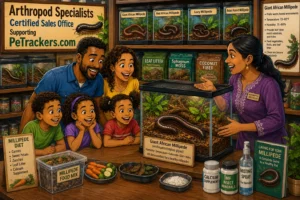
- Housing & Humidity (Hosing)
Giant African Millipedes as a Pet
- Substrate for your Giant African Millipede:
- Provide a deep layer – at least 3-6 inches – of organic – pesticide-free potting soil
- Provide a deep layer – at least 3-6 inches – of flake soil
- Provide a deep layer – at least 3-6 inches or compost mixed with decayed hardwood and oak leaf litter
Avoid coconut coir, which is difficult for them to digest.
- Humidity Maintenance Giant African Millipede:
- Keep the enclosure between 70% and 85% humidity
- By lightly misting the surface and walls daily
- Pour dechlorinated water directly into the substrate corners occasionally
- To keep deeper layers damp
- Without water-logging the tank
- Water Requirements
Giant African Millipedes as a Pet
Primary Hydration Giant African Millipedes as a Pet:
- Millipedes drink water droplets from misted enclosure walls and moss
- Water Dishes Giant African Millipedes as a Pet:
- Provide a shallow non-metallic dish
Safety note: Giant African Millipedes can drown easily – fill the dish with clean pebbles, gravel, or a natural sea sponge – so your Giant African Millipedes can safely drink.
- Water Quality Giant African Millipedes as a Pet:
- Use chlorine-free or spring water
- Food Requirements
Giant African Millipedes as a Pet
- Primary Diet Giant African Millipedes as a Pet:
- Giant African Millipedes substrate
- Giant African Millipedes decaying leaf litter
- Make up the majority of Giant African Millipedes diet
- Supplemental Feeding Giant African Millipedes:
- Offer fresh – sliced – peeled fruits
- Offer vegetables – cucumber – zucchini – apples – leafy greens 2-3 times a week
- Remove any uneaten fresh food within 24-48 hours to prevent mold
- Remove any uneaten fresh food within 24-48 hours to prevent pests
- Protein Giant African Millipedes:
- Provide occasional protein sources
- Such as soaked fish flakes
- Or dry dog kibble
- Calcium Giant African Millipedes:
- Always leave a chunk of cuttlebone
- In the enclosure for calcium
- Calcium is essential for Giant African Millipedes exoskeleton
- Why Families Enjoy Giant African Millipedes
Giant African Millipedes as a Pet
- Gentle Nature Giant African Millipedes:
- Giant African Millipedes do not bite or sting
- Giant African Millipedes move slowly
- Giant African Millipedes are easy to handle carefully
They are excellent for teaching children respect for small creatures and ecosystems.
- Educational Value Giant African Millipedes
Children can learn about: - Rainforest habitats Giant African Millipedes
- Decomposition and nutrient recycling
- Invertebrate life cycles
- Responsible pet care and observation
- Low Noise and Minimal Smell Giant African Millipedes
Unlike many pets, Giant African Millipedes:
- Giant African Millipedes make no noise
- Giant African Millipedes require little space
- Giant African Millipedes produce very little odour when their enclosure is maintained properly
- Handling Advice for Children
Giant African Millipedes as a Pet
Giant African Millipedes Teach children to:
- Wash hands before and after handling Giant African Millipedes as a Pet
- Allow your pet Giant African Millipede to crawl onto your hands – rather than grabbing it.
- Hold your Giant African Millipedes close to a table or lap in case it falls
- Supervise all younger children around Giant African Millipedes
When frightened – millipedes may curl into a spiral – or release a mild defensive fluid – that can irritate skin or eyes – hence gentle handling is essential.
- Lifespan and Commitment
Giant African Millipedes as a Pet
Families should understand that these Giant African Millipedes are a long-term responsibility – a Giant African Millipede can live:
- 7–10 years
- Sometimes longer
- With excellent care
This makes them a significant commitment, even though their daily care is relatively simple.
- Is This the Right Family Pet
Giant African Millipedes as a Pet
A Giant African Millipede is an excellent choice for families who want:
- A quiet pet
- An educational experience
- Minimal daily maintenance
- A gentle animal that can be observed and occasionally handled
However, they are probably not ideal for children expecting:
- A cuddly companion
- Interactive play
- Fast-moving or highly responsive behaviour.
For a family that appreciates nature and unusual animals – a Giant African Millipede can be a wonderful ambassador – for the incredible world of invertebrates – and a memorable first exotic pet.
Your Emergency Photos/Video on
Petracker.com
Made finding your Lost/Escaped
Giant African Millipede
Quicker and Easier to Find
And Happily Returned to You