


Opossums as a Pet
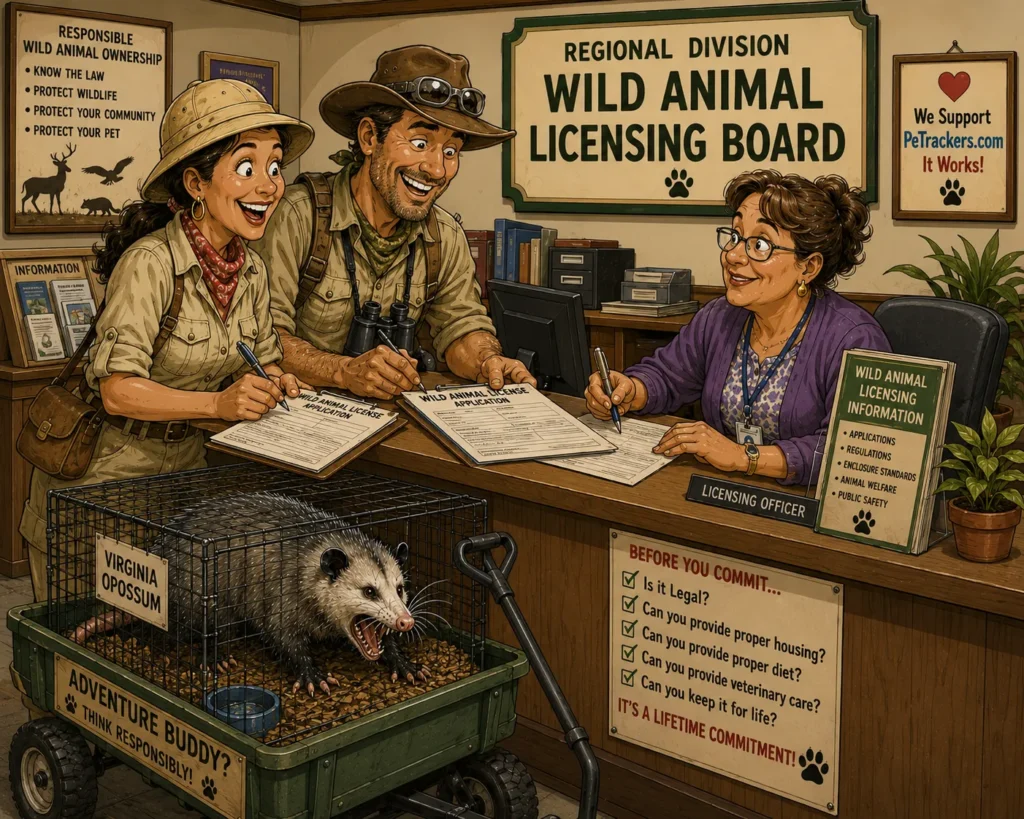
Considerations before Commitment
1. Housing Requirements
Opossums as a Pet
Opossums change den sites frequently – every few days – Opossums rarely dig their own burrows.
In the Wild Opossums live in
- Tree cavities
- Brush and wood piles
- Abandoned burrows
- In Urban Areas Opossums live in:
- Opossums readily nest in crawl spaces
- Opossums readily nest under decks
- Opossums readily nest in sheds
- Opossums readily nest in attics
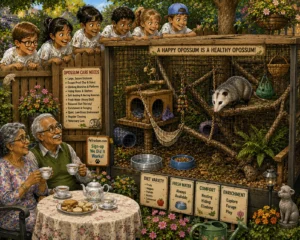
A safe shelter for your Opossum can readily be built in your yard inexpensive materials – an Opossum require much more than a conventional rodent cage – an Opossum’s nest would require a large secure escape-resistant environment with:
- Strong climbing branches
- Platforms and ramps
- Secure sleeping boxes
- Soft nesting materials
- Dry nesting materials
- Hiding areas
- Foraging opportunities
- Safe environmental enrichment
- Appropriate temperature and ventilation
- Easy-to-clean flooring
- Protection from children and household pets
The Opossum enclosure would need to accommodate climbing and exploration while preventing falls and escapes.
- Food Requirements
Opossums as a Pet
As opportunistic omnivores – Opossums will eat almost anything:
Opossums Natural Diet includes:
- Insects
- Snails
- Slugs
- Ticks
- Fallen fruit
- Rodents
- Carrion
- Opossums Urban Diet includes:
- Pet food
- Garbage
- Compost
- Opossums Management:
- Opossums are beneficial for backyard pest control
- Avoid nuisance encounters
- Secure all outdoor garbage in latched metal bins
- Bring house pet bowls inside at night
- An inappropriate Opossums diet can contribute to:
- Obesity
- Nutritional deficiencies
- Dental problems
- Serious bone disease
- Do not over-feed your pet Opossums:
- Fruit
- Meat
- Cat food
- Dog food
- Table scraps
- Sweet treats
A captive Opossum animal may require a professionally formulated diet containing appropriate amounts of:
- Calcium
- Phosphorus
- Protein
- Fibre
- Vegetables and plant material
- Carefully selected animal-based foods
A young pet Opossum should not be raised using an internet recipe – without guidance from an experienced wildlife rehabilitator – or exotic-animal Veterinarian.
- Water Requirements
Opossums as a Pet
Water is essential for urban Opossums, especially during hot dry summer spells:
- Simply leaving out a shallow bowl of fresh water
- In an accessible location helps Opossums immensely
- Keep the area around the water bowl clean and change the water daily
- Veterinary Care
Opossums as a Pet
Some Veterinarians cannot treat wildlife held as a pet without appropriate Legal Authorization – other Veterinarians may not have experience with Opossums.
Possible health concerns include:
- Nutritional bone disease
- Obesity
- Dental disease
- Parasites
- Skin conditions
- Respiratory illness
- Injuries
- Age-related illness
Emergency Veterinarian care may be expensive and difficult to find.
- Opossums as a Pet
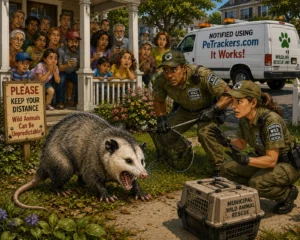
Never take a Healthy Wild Opossum Home
A young Opossum seen alone is not automatically orphaned – if you find one:
- Keep children and pets away
- Observe the Opossum from a safe distance
- Do not chase the Opossum
- Do not repeatedly handle the Opossum
- Do not offer the Opossum milk
- Do not attempt to raise the Opossum as a pet
- Contact a licensed wildlife rehabilitator if the Opossum appears injured
- Contact a licensed wildlife rehabilitator if the Opossum very young
- Contact a licensed wildlife rehabilitator if the Opossum weak
- Contact a licensed wildlife rehabilitator if the Opossum cold
- Contact a licensed wildlife rehabilitator if the Opossum isr genuinely orphaned
Wildlife rehabilitators are trained to provide specialized Opossum care – while preventing unnecessary Opossum dependence on people – the goal is usually safe Opossum release back into the wild.
- An Opossum is a Wild Animal
An Opossum not a Domesticated Pet
An Opossum raised by people retains natural wild Opossum behaviours -an Opossum may become accustomed to a certain caregiver – however the Opossum can still become frightened – defensive – destructive difficult to handle.
An opossum can may:
- Bare its teeth or hiss when frightened
- Drool as a defensive response
- Urinate or defecate when stressed
- Become active when the family is trying to sleep
- Climb furniture
- Investigate cupboards
- Tear soft materials while exploring
- Bite or scratch if cornered or restrained
- “Play dead” when severely frightened
A calm juvenile Opossum may become less tolerant of handling as ithe Opossum matures – A friendly young Opossum animal is not guaranteed to become a predictable Opossum adult family pet.
- Opossums as a Pet
Opossums are usually Unsuitable
For young children
Young children may want to hug – carry – chase – or wake a pet – these interactions with an Opossum could frighten an Opossum and create a risk of bites – scratches – falls – injury to the animal.
Children should never:
- Carry an Opossum around the house
- Pull the Opossum tail
- Wake the Opossum to play
- Corner the Opossum under furniture
- Put the Opossum faces close to the child’s face
- Feed the Opossum by hand
- Disturb the Opossum while eating or sleeping
If an Opossum is temporarily being cared for under professional wildlife-rehabilitation direction – children should observe quietly – rather than handle the Opossum.
Your Emergency Photos/Video
You Instantly Released on
PeTrackers.com
Made Finding your Opossum
Quicker and Easier to Find
And Happily Return to You!