
Ferret as a Pet
Health and Medical
Plans of Action
Ferrets are highly energetic, mischievous, and affectionate as pets. Ferrets require at least four hours of supervised playtime daily. Ferrets are not rodents – ferrets are domesticated members of the Mustelid Family and are carnivores.
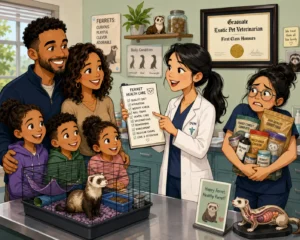
- Specialized Veterinary Care
Necessary for your Pet Ferret
Your Exotic Pet Veterinarian will check for:
- Regular veterinarian checkups with Exotic/Specialized Pet veterinarian
- Canine Distemper (fatal)
- Adrenal Disease – loss of hair, aggression, enlarge vulva in females
- Helicobacter Gastritis – teeth grinding. Vomiting, tarry stool
- Pancreatic tumour – Insulinoma – weakness, pawing at mouth/drooling, possible seizures
- Rabies
- Heart disease (cardiomyopathy) – weakness, coughing, fluid buildup
- Heart stroke
- Epizootic Catarrhal Enteritis (ECE)
- Pneumonia
- Enlarged Spleen – Splenomegaly
Exotic Pet Veterinarians are necessary and expensive.
- Diet/Nutrition and Obesity
For Your Pet Ferret
Ferrets are carnivores that primarily eat a variety of small prey in the wild.
- Obesity – avoid sugary treats, regular weight checks
- Portion control eating – do not overfeed nor give too many treats
- Dehydration – fresh clean water daily
- Inappropriate Carbohydrates intake – contributes to insulinoma
- Vitamin deficiencies – avoid dog/cat food substitutes for commercial ferret food
- Ferrets are unable to properly digest vegetables, fruits, cereals and grains – avoid these foods
- Ferrets’ food mostly is as kibble form
- Ferret food includes professionally offers as raw and freeze-dried
Consult your Exotic Pet Veterinarian for your pt’s diet.
- Ferret Dental Care
Owner and Veterinarian Duty
Ferrets require proactive dental care by owner a veterinarian to prevent:
- Dental periodontal disease
- Gum infection
- Tartar buildup
- Painful tooth fractures
Ferrets require:
- Tooth brushing 2-3 times a week
- Regular veterinarian cleaning and inspection
- Raw meaty-bones from butcher
Signs of Dental Disease:
- Bad breath/halitosis
- Red, swollen or bleeding gums/gingivitis
- Drooling
- Pawing a mouth
- Dropping food
- Difficulty chewing
- Reluctance to chew on hard items
- Reluctance to changes in eating habits
As a Ferret owner you must observe your pet daily.
- Skin Care and Grooming (minimal)
For your Pet Ferret
Ferrets shed twice a year (Spring and Fall) and require gentle maintenance of your pet’s skin, coat, claws, ears and teeth.
- Bath every 2 – 3 months – special shampoo
- Monthly nail trimming
- Brush coat 2-3 times a year
- Weekly ear cleaning
- Brush during shedding season – prevents hairballs
- Mast cell tumours
Ferret Allergies
- Immune responses to protein in their dander/saliva/urine
- Rhinitis
- Asthma
- Itchy skin
- Red eyes
- Toxic plants
- Household chemical
Ferret Parasites
- Fleas
- Ear mites
- Gastrointestinal – giardia, coccidia
- Heart-worm
- Zoonotic risks (transferable to humans) sarcoptic mange, cryptosporidium, giardia
As a Ferret owner you must observe your Ferret’s health daily.
- Falls and Trauma
Possible Joint Problems
For your Pet Ferret
If your Pet Ferret has fallen, there is a serious risk of internal bleeding, spinal injury or broken bones.
- Ferrets have poor depth perception
- Watch for limping or signs of paralysis
- Watch for dragging leg
- Watch for bleeding from mouth or nose
- Neurological issues (different pupil sizes)
Immediately seek emergency Veterinarian care.
- Mental Health and Enrichment
For Your Pet Ferret
To avoid depression and cage stress your pet Ferret requires 3-4 hours of out-of-cage playtime daily.
- cage confinement causes obesity , muscle wasting for lack of use
- lack of socialization with owner creates depression
- Gastrointestinal blockage – foam and rubber ingestion
- Unsafe bedding – cedar shavings cause respiratory problems
- Litter training
- Requires – dig boxes toys, tunnels, puzzle feeders
You the Ferret Owner must provide treasure-stashing and interactive play for stimulation and pet happiness.
- Cancer Risks
Your Pet Ferret
Ferrets are highly susceptible to cancers.
- Insulinoma pancreatic
- Adrenal glands tumours
- Mast cell limps
- Lymphoma
- Swollen lymph nodes
- Lethargy and hair loss
- Weight loss
As a Ferret owner you must observe your pet daily and have regular veterinarian check-ups.
- Aging Concerns
For your Pet Ferret
Daily observe your pet Ferret for:
- Hind leg weakness
- Lethargy
- Spinal issues
- insulinoma
- Enlarged Spleen – Splenomegaly
- End-of-life training/planning
If a Ferret pet is for you, enjoy the daily fun and joy of companionship.
Your Ferret will give You
Activity and Friendship
Your Emergency Photos/Video on
Petracker.com
Made finding your Lost Ferret
Quicker and Easier to Find
And Happily Return to You!