




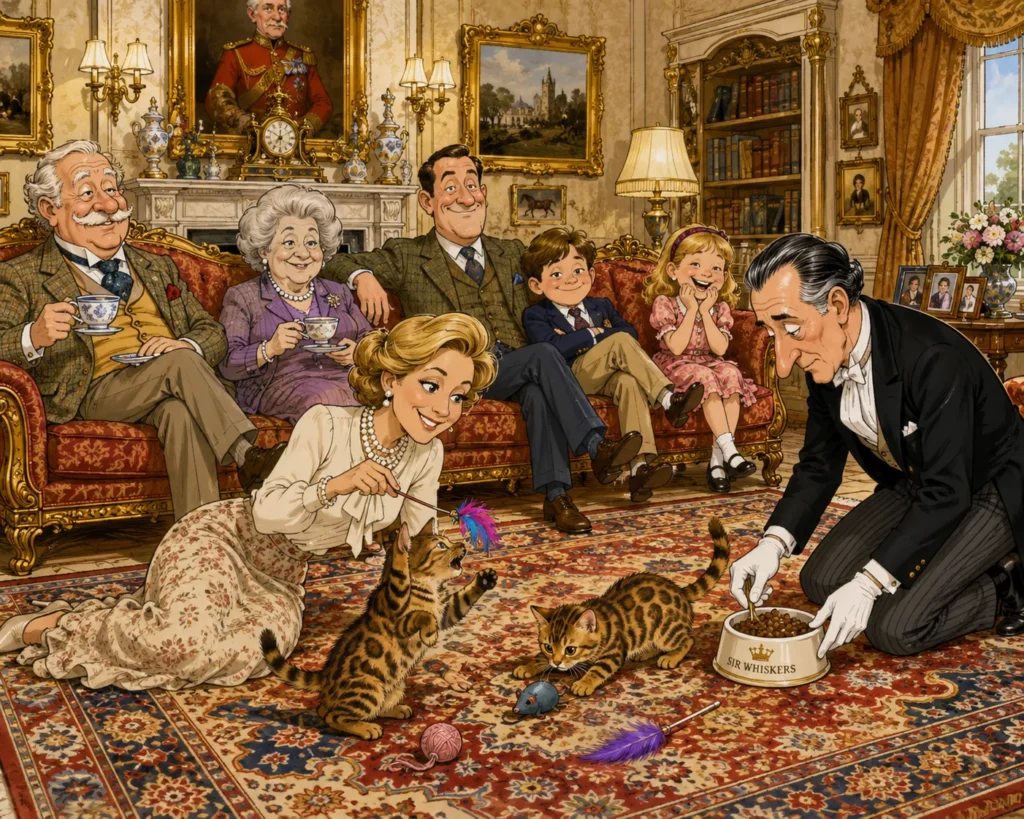
Bengal Cat as a Pet
Considerations before Commitment
A Bengal cat is often best suited to active families who want a highly interactive, intelligent pet cat – and are willing to invest time in training, play, and enrichment.
- Housing and Environment
Bengal Cat as a Pet
Bengal Cats housing should provide ample vertical climbing and mental stimulation.
Vertical Space for your Bengal Cat:
- Bengal Cats are agile
- Bengal Cats retain wild-type energy
- Bengal Cats thrive in environments with vertical territory – tall cat trees or cat wheels
- Puzzle Toys for your Bengal Cat:
- Because of Bengal Cats high intelligence – boredom can lead to destructive behavior
- Utilize puzzle feeders to keep Bengal Cats mentally stimulated
- Safety for your Bengal Cat:
- Because of a Bengal Cas nimble paws
- Make sure to safely secure personal belongings
- Block off aquariums – Bengal Cats are natural fishers
- Bengal Cats enjoy playing with water
- Food & Nutrition
Bengal Cat as a Pet
Bengal Cats diet requires high-quality, meat-first nutrition with minimal starches.
- Meat-Based Diet for your pet Bengal Cat:
- Bengals are obligate carnivores
- Bengal Cats need a high-protein (35%+) – meat-first diet
- Many Bengal Cat owners feed a combination of high-quality premium kibble, commercial wet food, or carefully balanced raw diets
- Avoid Starches for your pet Bengal Cat:
- Bengal Cats digestive systems process starch poorly
- As a Bengal Cat owner you must look for foods with limited grains or starches like peas and potatoes
- Portion Control for your pet Bengal Cat:
- Even though Bengal Cats are active
- Sterilized or castrated Bengals may require portion-control
- Bengal Cats require low-calorie diets to prevent weight gain
- Bowl Placement for your Bengal Cat:
- Bengals are picky about their environment
- Always keep food, water, and litter boxes physically separated from one another
- Water and Hydration
Bengal Cat as a Pet
Bengal Cats hydration depends on wet food and running water.
- Low Thirst Drive your Pet Bengal Cat:
- Like all cats, Bengal Cats have a low natural thirst drive
- Bengal Cats – like most cats – evolved to get most of their hydration from prey
- Chronic dehydration from an all-dry kibble diet can cause serious kidney or urinary issues
- Running Water Preference your Pet Bengal Cat:
- Many Bengal Cats dislike stagnant bowls
- Bengal Cats are fascinated by running water
- Considerations Before Purchasing
Bengal Cat as a Pet
Before buying a Bengal Kitten/Cat:
- Meet the breeder and see where the Bengal Kittens/Cats are raised
- Ask for health testing records for the Bengal Kittens/Cats parents
- Observe the Kitten's/Cat’s temperament
- Ensure the Bengal Kitten/Cat is well-socialized with people
- Ask about all vaccination, deworming, and veterinary records.
- Verify that the breeder will take the kitten/cat back if circumstances change.
- Cost Considerations
Bengal Cat as a Pet
In addition to the purchase price, budget for:
- Quality food
- Veterinary care
- Pet insurance
- Large cat trees and climbing equipment
- Interactive toys and puzzle feeders
- Scratching posts and enrichment items
- Advantages of Owning a Bengal Cat
Bengal Cat as a Pet
- Beautiful appearance:
- Bengal Cats distinctive spotted or marbled coats resemble a small wild cat
- Highly intelligent:
- Bengal Cats learn quickly
- Bengal Cats can often be taught tricks
- to provide regular mental stimulation.
- leash walking, and interactive games.
- Affectionate and social:
- Many Bengal Cats enjoy being involved in family activities
- Bengal Cats are known to often follow their owners from room to room.
4.Active companions:
- Bengal Cats are excellent for families who enjoy engaging with their pets.
5. Bengal Cats are Generally healthy breed:
– When obtained from a reputable breeder who performs health testing.
- Challenges to Consider
Bengal Cat as a Pet
- Bengal Cats are Very high energy levels:
- Bengals need significantly more exercise and stimulation than most cats
- Bengal Cats Can become destructive when bored:
- Scratching furniture, climbing curtains, opening cupboards
- Knocking objects over are common behaviours
- If your Bengal Cat’s needs are not met
- Bengal Cats Demand attention:
– Many Bengals do not enjoy being ignored for long periods
- Bengal Cats are Vocal breed:
– They often communicate with a wide variety of chirps, meows, and sounds.
- Bengal Cats are Not always ideal for sedentary households:
– Families looking for a quiet lap cat may find a Bengal overwhelming.
Before adopting or purchasing a Bengal Cat – it is important to know that they are not typical, chill lap cats.
- Good Homes for Bengals
Bengal Cat as a Pet
A Bengal may be an excellent choice if your family:
- Has time to interact with your Bengal Cat daily
- Can provide climbing structures, cat trees, and toys
- Enjoys active pets
- Has older children who understand respectful handling of animals
- Is prepared for a cat that behaves more like an energetic dog than a typical cat
Bengal Cats as pets are highly active, intelligent, and lean cats that require specialized care.
- Homes That May Want Another Breed
Bengal Cat as a Pet
A Bengal may not be the best choice if:
- Family members are away most of the day
- You want a calm, low-maintenance cat
- You live in a very small space with limited opportunities for exercise and enrichment
- You are unable to provide regular mental stimulation
For the right household, a Bengal can be an entertaining, affectionate, and loyal companion.
- Taiwan Authorities
Bengal Cat as a Pet
Taiwanese authorities heavily regulate wild-domestic hybrids – if you are bringing a Bengal Cat into Taiwan – you must meet very specific generation requirements:
The “F5” Rule:
- Bengal cats must be at least the 5th generation (F5) removed from the Asian Leopard Cat
- To be considered safe and domesticated enough
- To be imported and kept as a pet
Documentation for Bengal Cat Importation:
- You will be required to provide official documentary proof
- Or a pedigree certificate
- Verifying that your Bengal Cat is an F5 generation or higher.
Due to their wild hybrid lineage, Bengal Cats require specific paperwork – especially if you are importing them or breeding Bengal Cats.
Your Emergency Photos/Video on
PeTrackers.com
Made it Easier to Find
And Quicker to Reunite
Your lost Pet Bengal Cat
To You Safely