
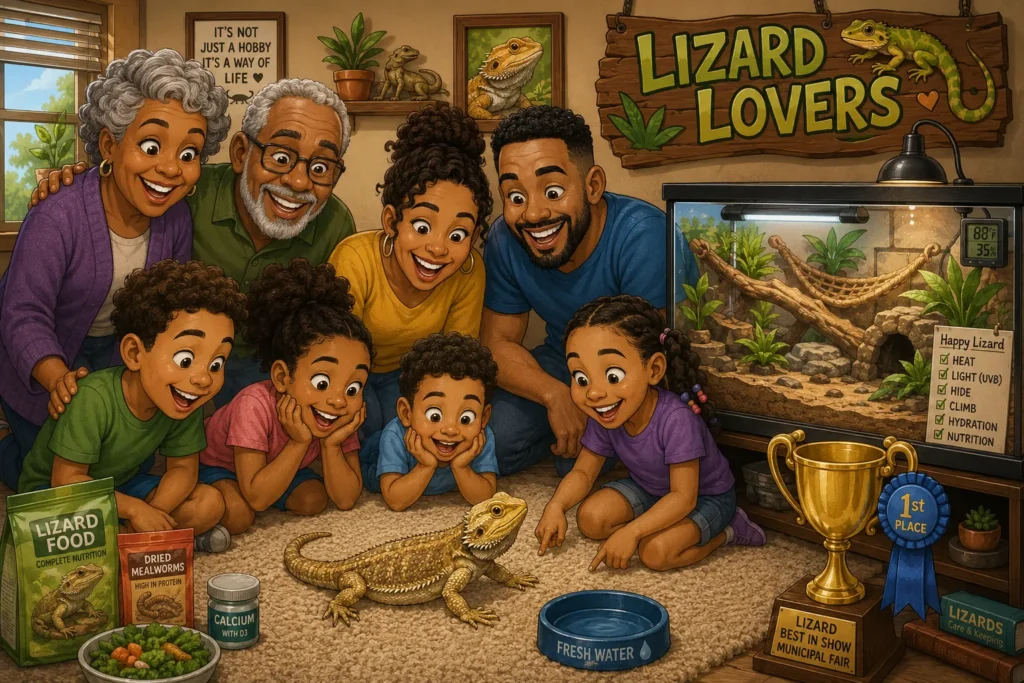
Lizards as Pets
(Dragon Reptiles)
Considerations before Purchasing
Lizard (Dragon Reptiles) as a pet has important realities you must consider/understand before purchasing and bringing a lizard home as a pet.
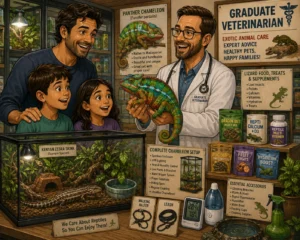
- Space Needs/Requirements
Lizard as a Pet
Lizards are active pets and require a large specialized terrarium – seek advice from professionals/Veterinarian on the proper size and shape terrarium for your chosen pet lizard:
- The terrarium (glass or PVC) or wooden vivarium) must be secure and escape-proof – with a solidly fitted mesh lid
- The terrarium must be properly ventilated and mimic the lizard’s natural environment
- There must be a thermal gradient for a warm basking spot to cool side
- Appropriate substrate
- Branches for climbing
- Hiding places for security
- Food and water bowls
Be prepared to have a dedicated space in your home for the lizard’s terrarium home.
- Temperature and Lighting
Lizard as a Pet
Lizard’s bodies are heat and light sensitive:
- Your pet lizard will require proper heat lams and UVB lighting inside the terrarium for survival
- Daily monitoring of the terrarium environment is not optional it is mandatory
- Neglect or a power outage will quickly become life-threatening
Heat and light must be attended to daily.
- Diet and Live Foods
Lizard as a Pet
Lizards diet requires collecting/purchasing live foods:
- Water – fresh daily in a shallow dish
- Lizards exist on live insects such as crickets, mealworm – store bought to avoid wild insects with pesticides
- Leafy greens – collard greens, turnip greens, dandelion greens, kale
- Vegetables – shredded carrots, yellow squash, bell peppers, green beans
- Fruit – papaya, strawberries, blue berries, raspberries, mango
Lizards must avoid eating iceberg lettuce, onions, garlic.
- Diet and Essential Supplements
Lizard as a Pet
Lizards require their foods to be “dusted” with supplemental powders – avoids/prevents metabolic bone disease:
- Calcium powder
- Multivitamin powder
Consult your veterinarian on quantity and use for your specific lizard pet.
- Health Risks and Hygiene
Lizard as a Pet
Lizards are untamed animals in nature:
- Reptile can carry salmonella (salmonellosis) – causes fever, diarrhea, stomach ache/pains
- Mycobacterium marinum/chelonea – can cause infections and skin lesions in individuals with weakened immune systems
- Campylobacteriosis – can cause severe diarrhea and abdominal pains
- Botulism – a serious, potentially fatal disease caused by toxins
- Aeromonas aquodic bacteria causing infections
- Cryptosporidium – internal parasite
Wash hands every time you are ouching anything to do with your pet lizard.
- Preventing Disease Transmission
Lizard as a Pet
It is every person/individual’s duty/responsibility to maintain constant cleanliness/sanitation against possible painful infections:
- Wash hands with soap and water immediately after handling/touching your pet lizard, it’s food, water or any part of the secure enclosure
- Do not permit your pet lizard to roam the kitchen or anywhere near your food supplies
- Do not permit your pet lizard roaming on or near food prep areas no anyplace where food is consumed
- Childre must be vigorously trained and supervised to ensure they never handle the lizard roughly and never put the lizard near their face – ensure children understand the reason/necessity of soap and water hand washing after handling the lizard
Constant reminding of disease prevention a safety must.
- Enclosure Cleaning Rules
Lizard as a Pet
- Never clean the enclosure nor anything to do with the enclosure in the kitchen – human food safety area
- Never clean the enclosure nor anything to do with the enclosure in the bathroom
- If you must clean the enclosure in your home – designate and area that will isolate the cleaning – then clean the area where you cleaned the enclosure – health safety first
- Best cleaning solution – take the cleaning outside in a safe cleaning area
- Financial Considerations
Lizard as a Pet
Pets are an expense for proper care.
Initial costs:
- Purchase price for lizard of your choice as pet
- Proper enclosure for your size lizard pet
- Required lighting
- Proper heat regulator
- Lizard décor inside the enclosure for a happy lizard
Ongoing Costs:
- Food – store purchased insects – no pesticides
- Electricity for maintenance of enclosure environment
- Replacements inside enclosure
Regular visits to your exotic pet veterinarian are costly but necessary for a healthy pet lizard.
- Handling and Temperament
Child/Children Reality Check
Lizard as a Pet
You the parent/guardian/adult must maintain control at all times around children.
- Some species of lizards can tolerate handling – others do not and can become regressive
- Improper handling will cause stress for your pet lizard
- Lizards/reptiles are not an “interactive” pet – hence are not ideal if your children are anticipating a cuddly pet
Consider, your child/children may lose interest – if that is a possibility do you really want to purchase a lizard pet.
- Impact On Lifestyle and Travel Plans
Lizard as a Pet
Lizards are a care intensive pet.
- Do you have a reliable lizard sitter while you are away
- Taking our pet lizard on vacation involves numerous inconveniences
A lizard may not be for your family if your job/work/income involves travel.
- Legal and Ethical Considerations
Lizard as a Pet
Certain species may be prohibited in your area for environmental reason – in case of escape
- Certain species may be illegal to own
- Owning a wild-caught lizard may be illegal in your area
Always purchase your pet lizard from a reputable/knowledgeable pet dealer.
Lizards are Escape Artists
Your Emergency Photos and Video
PeTrackers.com
Made it Easier to Find
And Quicker to Reunite
Your lost Pet Lizard
To You Safely