Maine Coon Cat as a Pet
Considerations before Commitment
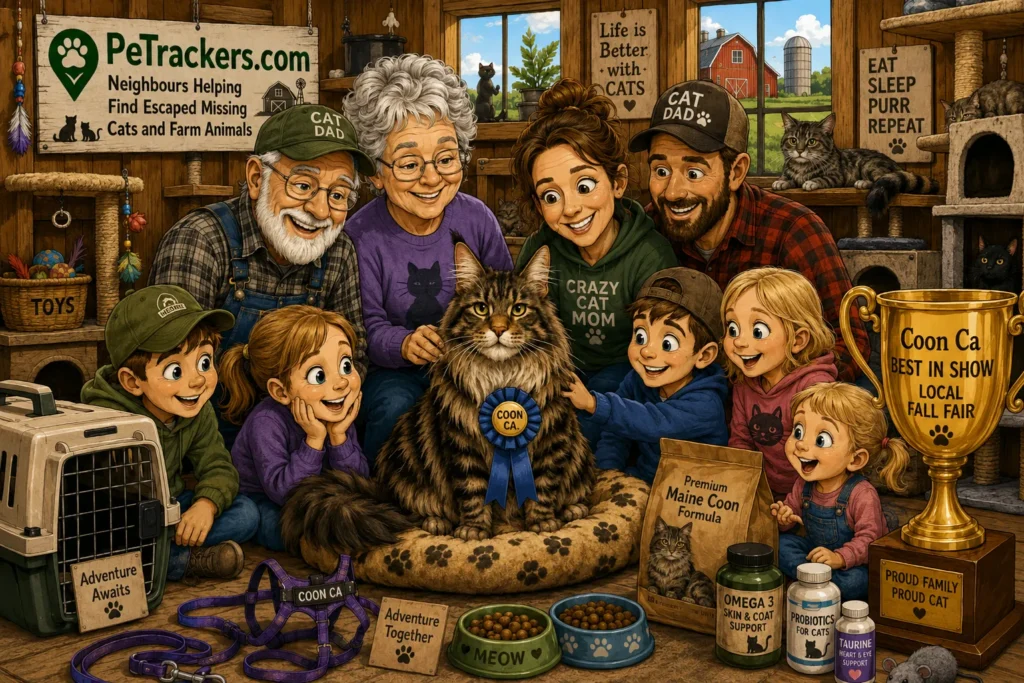
Maine Coon Cats are known as “Gentle Giants” requiring specialized care addressing their massive size, high intelligence, and specific genetic health risks.
- Housing Necessities
Maine Coon Cat as Pet
Because Maine Coons can grow up to 11 kg (25 lbs) and over a meter long, standard cat furniture will not work.
- Heavy-Duty Coon Cat Trees:
- Look for trees built with solid wood bases
- Extra-wide platforms to prevent tipping over under their immense weight
- Jumbo Coon Cat Litter Boxes:
- Standard boxes cause cramping
- Provide a giant, open-top litter pan or a custom storage-tote conversion
- So your Coon Cat can comfortably turn around
- Sturdy Scratching Posts:
- Coon Cats need tall, heavy scratching pillars
- Coon Cats require floor pads to stretch out their long spines fully without knocking the post over
- Mental Enrichment:
- Maine Coon Cat breed is highly intelligent and dog-like
- Provide puzzle feeders for mental stimulation
- Provide vertical window perches, and high-activity toys
- to prevent boredom-driven behaviour issues
- 2. Diet and Nutrition
Your Pet Maine Coon Cat
Maine Coons have an extended growth period that lasts up to 4 years, requiring tailored fuel for bone and muscle development.
- High Protein, Low Carb:
- As obligate carnivores, Maine Coon Cat diet should consist of at least 35–40% high-quality animal protein (chicken, turkey, salmon) as the primary ingredient
- Avoid heavy grain fillers like corn, wheat, or soy
- Wet or Raw Focus:
- Prioritize moisture-rich canned food
- A commercially prepared, balanced raw diet
- This protects their kidneys and prevents urinary crystals
- Joint and Coat Support:
- Ensure their food contains Omega-3 and Omega-6 fatty acids for their thick coats
- Glucosamine and chondroitin to support their heavy joints
- Calorie Management:
- Maine Coon Cats eat more than average cats
- Maine Coon Cats are prone to obesity if free-fed dry kibble
- Use a structured feeding schedule
- Veterinarian suggested diet based strictly on their body weight
- Water Requirements
Maine Coon Cat as Pet
Maine Coons are notoriously fascinated by water:
- Wide, Heavy Bowls:
- Use wide stainless steel or ceramic dishes so their whiskers do not brush against the sides
- Heavy dishes prevent them from flipping the bowl over during water play
- Circulating Water Fountain:
- Cats naturally prefer moving water
- A circulating fountain helps keep
- your Coon Cat pet properly hydrated
- Expect your Coon Cat to splash and play with the stream!
Coon cats are prone to “Whisker Fatigue” if forced to drink from narrow bowls.
- Veterinary Care and Health Screening
Maine Coon Cat as Pet
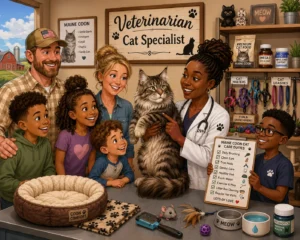
This breed is genetically predisposed to specific hereditary health issues, making structured vet screenings essential.
- Hypertrophic Cardiomyopathy (HCM):
- This genetic heart condition is a major risk for the breed
- Ask your breeder for DNA clearances
- Have your Coon Cat Veterinarian perform a base cardiac electrocardiogram (heart ultrasound) starting at age 2, repeated periodically.
- Hip Dysplasia:
- Due to their heavy builds, they can develop hip joint anomalies
- Have your vet monitor their gait (“bunny hopping”) and take preventative X-rays
- Often ideally timed alongside a spay or neuter surgery
- Spinal Muscular Atrophy (SMA):
- A neurological muscle-wasting disease that can be ruled out early via a DNA test.
- Routine Schedule:
- Standard annual exams are necessary for dental health
- Vaccine updates, and weight monitoring
- Move to twice-yearly exams once they hit senior status (around age 7)
- Why Maine Coons Make Good Family Pets
Your Pet Maine Coon Cat
Because of their impressive size, shaggy coats, and dog-like personalities, they remain a top-ranking and widely beloved feline across the country
- Friendly and gentle temperament:
- Coon Cats often called “gentle giants” because of their large size and affectionate nature
- Coon Cats usually get along well with respectful children
- Coon Cats tend to be sociable and enjoy being around family activities.
- Coon Cats are intelligent and trainable:
- Can learn simple commands and routines
- Many enjoy interactive toys, puzzle feeders, and even leash training.
- Good with other pets:
- Coon Cats often coexist well with dogs and other cats when properly introduced.
- Things to Consider Before Buying
Maine Coon Cat as Pet
- Coon Cats grow very large:
- Adult Coon Cat males commonly weigh 13–18 pounds (6–8 kg), and some grow larger
- Coon Cats need sturdy cat trees, larger litter boxes, and more living space than many cat breeds.
- Coon Cats Long coat requires grooming:
- Weekly brushing is essential
- During shedding seasons, more frequent grooming may be needed to prevent matting.
- Higher food and Veterinary Costs
Your Pet Maine Coon Cat
- Larger cats eat more food
- Annual veterinary expenses may be higher than for smaller breeds.
- Health Questions to Ask the Breeder
Your Pet Maine Coon Cat
A responsible breeder should be able to provide health testing information for conditions such as:
- Hypertrophic cardiomyopathy (heart disease)
- Hip dysplasia
- Spinal muscular atrophy
As a new Coon Cat owner ask to:
- Meet the kitten's parents if possible
- See veterinary records
- Confirm vaccinations and de-worming
- Obtain a written health guarantee.
- Is a Maine Coon Right for Your Family
Your Pet Maine Coon Cat
A Maine Coon can be an excellent choice if your family:
- Wants an affectionate, people-oriented cat
- Has time for grooming and interaction
- Can accommodate a large indoor cat
- Is prepared for a 12–15+ year commitment
You may want to consider another breed if:
- Family members have severe cat allergies
- You want a very low-maintenance pet
- Your budget is limited for food and veterinary care
- Advice for Children
Your Pet Maine Coon Cat
Teach children to:
- Let the Coon Cat approach them
- Never pull the Coon Cattail or fur
- Respect Coon Cat sleeping and eating times
- Help with Coon Cat brushing and playtime
When raised in a loving environment, a Maine Coon often becomes a. devoted family companion that enjoys being involved in everyday household life.
Your Emergency Photos/Video on
PeTrackers.com
Made finding your Lost Maine Coon Cat
Quicker and Easier to Find
And Happily Returned to You