



British Shorthair Cats
Considerations before Commitment
If the household is away much of the day and the budget allows, a compatible British Shorthair pair can reduce boredom and rough play directed at children. Often a British household have a dog and a cat as a pet.
- Housing & Living Space
For Your British Shorthair Pet Cat
The golden rule for a multi-pet home is vertical separation. While British Shorthairs are dense, muscular cats who love lounging on the floor, they require elevated safety zones for personal safety.
- Elevated Safe Zones:
- Install sturdy cat trees
- Install sturdy wall shelves
- Clear off window sills
This gives your cat a way to navigate a room without walking directly past a dog.
- Dog-Proof Basecamp:
- Use a baby gate (ideally one with a small cat door built-in)
- Block off one room entirely for the cat
This area must have their main bed ad liter box.
- Litter Box Security:
- Dogs are notoriously attracted to cat litter boxes
- Keep the litter box in the cat-only room, inside a top-entry box, or behind a door equipped with a latch strap that only opens wide enough for a cat
A dog-proof vertical sanctuary for your Shorthaired Cat is essential for security.
- Diet & Feeding Routines
For Your British Shorthair Pet Cat
British Shorthairs are prone to obesity because British Shorthair Cats are naturally stocky and less active than other breeds – managing their diet around dogs requires careful planning.
- Separate Feeding Stations:
- Never feed your cat on the floor near a dog
- Feed your British Shorthair on a high countertop, sturdy table, or inside their gated safe zone
- Dog food lacks taurine (an essential amino acid cats need for heart and eye health), while cat food is far too high in protein and fat for dogs
- Preventing Food Theft:
- If your dog is a “vacuum cleaner,” avoid free-feeding dry food to your cat
- Move to scheduled meals or use a microchip-activated pet feeder that only opens for your specific cat
- Portion Control:
- Keep your British Shorthair on a precise, measured diet
- High-quality wet and dry food to protect their joints and cardiovascular health
- Water Requirements
For Your British Shorthair Pet Cat
Hydration is critical for British Shorthaired cats to prevent lower urinary tract diseases, but household dogs can easily drain a standard water bowl in seconds.
| Feature | Cat Requirements | Dog Compatibility |
| Placement | High up or behind a baby gate | Keep away from low-profile, shared floor spaces |
| Type | Prefers moving water (fountains) | Can share large fountains, but cats prefer quiet zones |
| Material | Ceramic or stainless steel (prevents feline acne) | Sturdy, tip-proof heavy bowls |
Pro-Tip: Place a dedicated circulating pet fountain in your cat’s elevated sanctuary – cats are naturally driven to drink more from moving water -keeping it high up ensures the dog won’t accidentally empty it – or stress the cat while they drink.
- Why many Families Like
British Shorthair Cats
As Family Pets
- Calm, steady temperament: usually less frenetic than many active breeds
- Affectionate without being clingy: often enjoy being near people but may not demand constant attention
- Moderate activity level: generally happy with indoor play sessions rather than marathon exercise
- Dense plush coat: attractive and relatively easy to maintain compared with long-haired breeds.
Important cautions for households with young children:
- British Shorthair cats dislike rough handling:
- A British Shorthair may tolerate gentle petting but resent being picked up, hugged tightly, or chased
- Some British Shorthair cats are cuddly;
- British Shorthair cat’s sturdy build can hide weight gain
- Ask breeders about screening for hypertrophic cardiomyopathy (HCM) and polycystic kidney disease (PKD)
- British Shorthair cats can be expensive:
- Budget for purchase price
- Budget for spay/neuter if not included
- Budget for microchip, carrier, litter setup, scratching posts
- Budget for insurance or emergency savings
- Budget for an annual veterinary care
What to ask a breeder or rescue centre:
- Why British Shorthairs Make Good Family Pets
British Shorthair Cats
As Family Pets
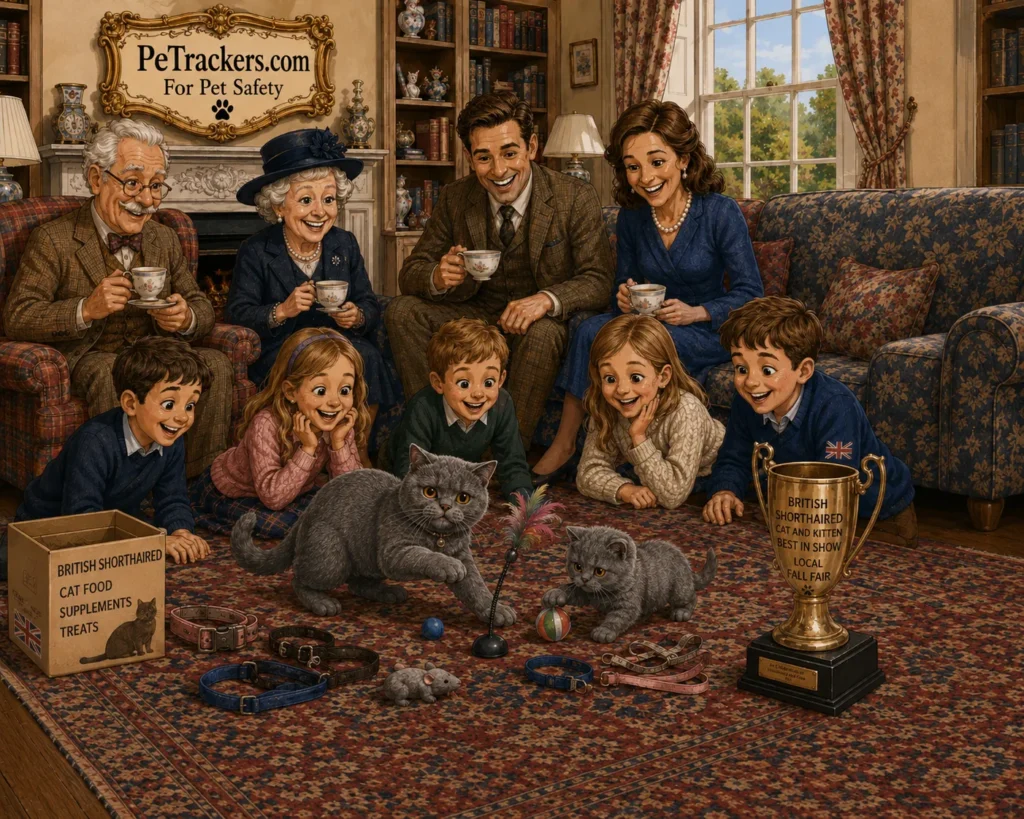
- British Shorthairs Calm and Gentle Nature:
- British Shorthairs cats are known for being relaxed, patient, and easygoing
- They typically tolerate the activity and noise of family life better than many more sensitive breeds
- Most British Shorthairs cats are affectionate without being overly demanding.
- British Shorthairs Good with Children:
- British Shorthairs are generally friendly with respectful children
- British Shorthairs sturdy build makes them less fragile than some smaller or more delicate cat breeds
British Shorthairs often enjoy being near family members, even if they don’t always want to be carried.
- British Shorthairs Moderate Activity Level:
- British Shorthairs enjoy playtime but are not usually hyperactive
- British Shorthairs are often content with indoor living when provided with toys, scratching posts, and climbing areas
- British Shorthairs dense plush coat requires less grooming than long-haired breeds
- Weekly brushing is usually sufficient, with more frequent brushing during seasonal shedding periods.
- Things to Consider
British Shorthair Cat as a Pet
- British Shorthairs Not Usually a “Lap Cat”:
- Many British Shorthairs prefer sitting beside their people rather than on them
- Families seeking a highly cuddly cat may prefer a breed such as the Ragdoll Cat
- British Shorthairs Can Become Overweight:
- British Shorthairs have a stocky build and can gain weight easily
- Regular play, portion control, and a quality diet are important
- British Shorthairs Purchase Cost:
- Well-bred kittens can be expensive
- In addition to the purchase price
- Budget for veterinary care
- Budget for food
- Budget for insurance
- Budget for litter, scratching posts, and toys
- Health Screening
British Shorthair Cat as a Pet
- Purchase only from reputable breeders who health-test their breeding cats
- Ask about screening for hereditary conditions such as heart disease and genetic disorders that can occur in the breed.
8. Before Bringing One Home
British Shorthair Cat as a Pet
Make sure your family is prepared for:
- 12–20 years of commitment
- Daily feeding and litter box maintenance
- Regular expensive Veterinary visits
- Safe indoor living arrangements
- Teaching children how to interact gently and respectfully with cats
The British Shorthair Cat makes an exceptional, low-maintenance pet known for its calm, easygoing temperament and distinct “teddy bear” appearance – they are independent yet intensely loyal companions that fit well into apartments and busy households alike.
Your Emergency Photos/Video on
PeTrackers.com
Made finding your Lost British Shorthaired Cat
Quicker and Easier to Find
And Happily Returned to You