





Desert Rain Frog
Considerations before Commitment
- Conservation Warning
Desert Rain Frog
The Desert Rain Frog is a near-threatened – highly specialized wild species of Frog – severely affected by habitat loss – Desert Rain Frog do not adapt well to captivity – Desert Rain Frog do not adapt to standard pet trade conditions – Desert Rain Frog are exceptionally difficult to keep alive – outside of a certified Professional Zoological Program.
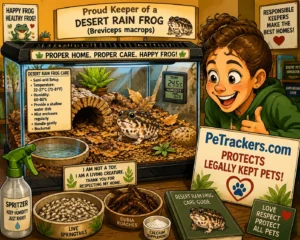
- Housing Requirements
Desert Rain Frog
The Desert Rain Frog (Breviceps macrops) is famous for its tiny size, round body, and squeaky defensive call.
- Substrate for a Desert Rain Frog:
- A deep, 8 to 12 inch layer of fine – loose sand – is mandatory
- Desert Rain Frog spend the entire day burrowed in the sand
- To avoid extreme desert heat
Finding the right balance between humidity and ventilation can be challenging.
- Temperature Desert Rain Frog:
- Maintain an ambient temperature of roughly 18–24°C (64–75°F) daytime
- Maintain an ambient temperature of roughly 15–20°C (59–68°F) nighttime
- Desert Rain Frog do not tolerate high heat
- Heat causes Desert Rain Frog dehydration
Avoid overheating, as high temperatures can quickly stress Desert Rain Frog.
- Lighting Desert Rain Frog:
- Provide a low-level – subdued lighting cycle
- To mimic Desert Rain Frog nocturnal nature
- Allowing Desert Rain Frog to emerge only at night
- A proper Desert Rain Frog enclosure should include:
- A 10–20 gallon terrarium for one Desert Rain Frog
- Deep sandy substrate (4–8 inches/10–20 cm) for Desert Rain Frog burrowing
- Excellent ventilation
- Secure escape-proof lid
- Pieces of bark or cork for shelter
- Small water dish that cannot be tipped over
- Low lighting—no bright basking lamps.
Unlike tropical frogs, require conditions that resemble the cool coastal deserts of southwestern Africa.
- Water Requirements
Desert Rain Frog
- No Standing Water Desert Rain Frog:
- These Desert Rain Frog do not use open water dishes or pools
- Absorption Desert Rain Frog:
- Desert Rain Frog absorb moisture directly through their highly permeable skin
- While resting on damp sand
- Mist/Fog Desert Rain Frog:
- Use a reptile fogger
- Use a heavy nightly spray
- To moisten the surface of the sand
- Mimicking the rolling oceanic fogs of Desert Rain Frog natural habitat
- Food Requirements
Desert Rain Frog
- Diet Desert Rain Frog:
- Desert Rain Frog are strictly insectivorous
- In the wild Desert Rain Frog diet consists of small beetles
- In the wild Desert Rain Frog diet consists of moths
- In the wild Desert Rain Frog diet consists of ants
- In the wild Desert Rain Frog diet consists of termites
- In the wild Desert Rain Frog diet consists of insect larvae found in and around patches of dung
Dust insects regularly with:
- Calcium
- Vitamin D3 – if no UVB is provided
- Multivitamin supplement
Juveniles Desert Rain Frog eat more frequently than adults.
- Feeding Desert Rain Frog:
- Gut-loaded appropriately sized feeder insects like pinhead crickets
- Gut-loaded appropriately sized feeder insects like small roaches
- Gut-loaded appropriately sized feeder insects like flightless fruit flies
Desert Rain Frog should be offered at night when the Desert Rain Frog naturally emerges.
- Costs For Keeping
Desert Rain Frog
Potential expenses for Desert Rain Frog include:
- Quality terrarium Desert Rain Frog
- Heating and environmental controls Desert Rain Frog
- Hygrometer and thermometer Desert Rain Frog
- Live insect colonies Desert Rain Frog
- Veterinary care Desert Rain Frog
- Ongoing supplies Desert Rain Frog
The initial Desert Rain Frog setup often costs far more than the Desert Rain Frog itself.
- Handling Rules
Desert Rain Frog
- Handling should be kept to an absolute minimum because:
- Desert Rain Frog skin is delicate
- Oils and chemicals on human hands can harm Desert Rain Frog
- Stress may affect Desert Rain Frog health
Children should enjoy watching Desert Rain Frog rather than holding them.
- Cleaning Requirements
Desert Rain Frog
- Remove Desert Rain Frog waste daily
- Replace Desert Rain Frog soiled substrate as needed
- Thoroughly clean the Desert Rain Frog enclosure every few months
Always use amphibian-safe cleaning methods.
- Veterinary Car
Desert Rain Frog
Before obtaining any exotic amphibian, locate an Exotic Pet/Animal Veterinarian experienced with amphibians – Desert Rain Frog illnesses can include:
- Skin infections
- Parasites
- Dehydration
- Nutritional deficiencies
Early treatment is important because Desert Rain Frog often hide signs of illness until Desert Rain Frog are seriously sick.
- Best for Families
Desert Rain Frog
This Desert Rain Frog species is best suited to:
- Experienced amphibian keepers
- People who enjoy observing rather than handling pets
- Adults willing to carefully maintain specialized environmental conditions
Desert Rain Frog is not recommended as a first pet for children.
For most families who want an interactive amphibian, captive-bred species such as the White’s tree frog or African dwarf frog are generally much easier to care for and more commonly available from responsible breeders
- Legal Considerations
Desert Rain Frog
The Desert Rain Frog has a limited natural distribution along the Atlantic coast of Namibia and South Africa – in many places, legal, captive-bred Desert Rain Frog specimens are extremely uncommon – Wild-caught Desert Rain Frog animals should be avoided – because Wild-caught Desert Rain Frog can impact native populations and often adapt poorly to captivity.
Your Emergency Photos/Video on
PeTrackers.com
Made it Easier to Find
And Quicker to Reunite
Your lost pet Desert Rain Frog
To You Safely