


Rhinoceros Beetles as Pets
Considerations before Commitment
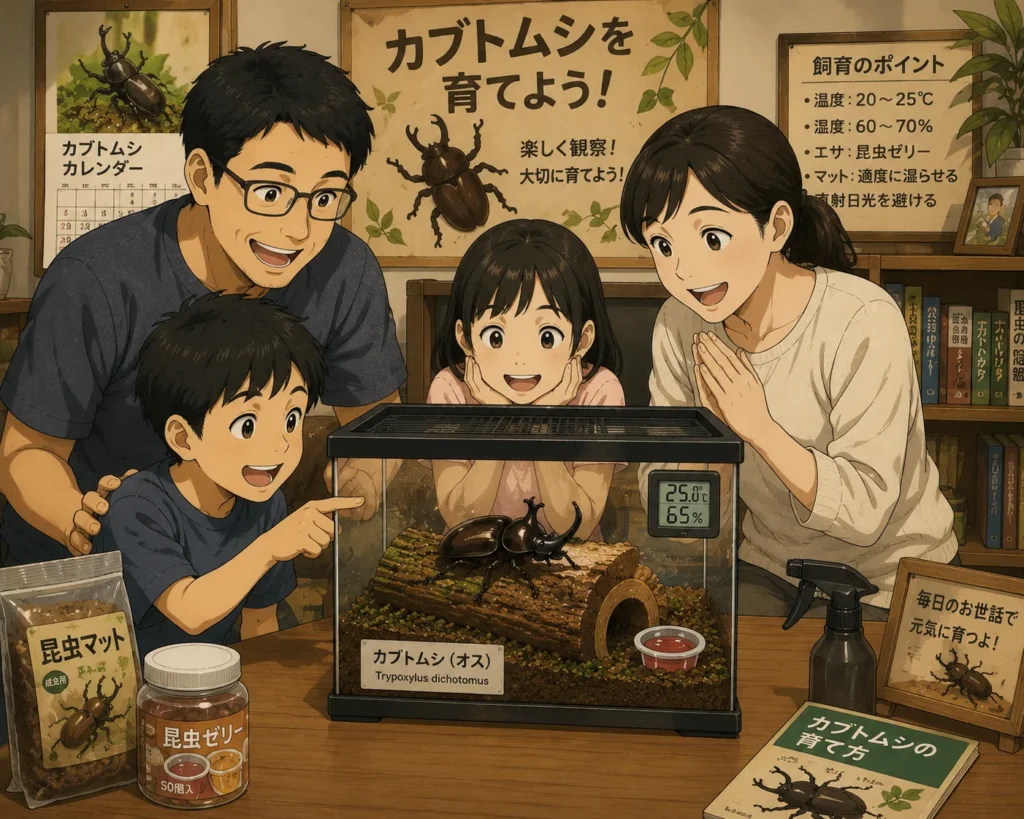
A Rhinoceros Beetle can be a fascinating pet for a child, especially if you are looking for a family pet that is quiet, inexpensive, and relatively easy to care for.

- Habitat Setup
Rhinoceros Beetles as Pets
To keep an adult beetle healthy, provide a spacious, well-ventilated enclosure:
- Enclosure Size:
- A large, tall plastic tub or glass terrarium works best
- The height should be at least double the length of your beetle
- Substrate (Bedding):
- Use flake soil – decaying white-rot hardwood, or coconut fiber
- Pack the bottom 2 inches tightly – leave the rest loose
- The substrate should be damp like a forest floor – when you squeeze a handful – it should clump together – but not drip water
- Accessories Rhino Beetles:
- Add branches or cork bark
- Rhino Beetles are clumsy – often flipping onto their backs
- Branches and cork provide leverage so the Rhino Beetle can right themselves
- Temperature & Humidity Rhino Beetles:
- Maintain a room temperature between 18–25°C (68–77°F)
- Keep the habitat at 60–70% humidity
- By misting the sides of the enclosure every few day
Rhinoceros Beetles are fascinating, low-maintenance pets.
- Food Requirements
Rhinoceros Beetles as Pets
In the wild, adults eat tree sap and rotting fruits. In captivity, you can feed them:
What to feed Rhino Beetles:
Protein supplementation helps to grow big beetles!
- Sweet, non-citrus fruits like banana, apple, or melon
- Alternatively – buy commercially available beetle jelly (a nutrient-dense gel) online or at specialty pet stores
Many Rhino Beetle owners supplement the diets of the beetle larvae with dried dog food pellets.
- Feeding tips Rhino Beetles:
- Place food in a shallow dish
- Shallow dish keeps it from dirtying the substrate
- Replace fruits and jellies daily
- To prevent mould, mites, and fruit flies
Watered down maple syrup, brown sugar or other sugary liquids can be offered in shallow cups (milk caps, for example).
- Water Requirements
Rhinoceros Beetles as Pets
The elytra and pronotum (abdominal and thoracic portions of the “shell”) will darken when the humidity is high.
1. Do Rhinoceros Beetles need a water dish:
- No!
- Do not put an open water dish in the enclosure
- Rhino Beetles can easily drown
- Hydration Rhino Beetles:
- Rhino Beetles get all the hydration they need from eating moist fruits and beetle jellies
- Spraying the substrate and the walls of the tank also provides the necessary drinking drople
Rhino Beetles will take advantage of minimum of 4 inches/10 centimeters of substrate to burrow in – this prevents he Rhinoceros Beetles from drying out too much.
- Advantages of Rhino Beetles as Pets
Rhinoceros Beetles as Pets
For a child/family who loves bugs, nature, and science, a Rhinoceros Beetle can be an excellent first pet.
- Rhinoceros Beetles Easy to Care For:
- Require relatively little daily maintenance
- Do not need walks, grooming, or extensive training
- Feeding and habitat cleaning are simple
- Rhinoceros Beetles are Educational Pets:
- Children can learn about insect life cycles, metamorphosis, and nature
- Encourages curiosity about science and wildlife
- Great for school projects and nature studies
- Rhinoceros Beetles are Quiet and Apartment-Friendly:
- Make very little noise
- Require only a terrarium or insect enclosure
- Suitable for apartments and smaller homes
- Rhinoceros Beetles are Safe:
- Rhinoceros beetles are generally harmless
- They do not bite aggressively
- Their large horns may look intimidating – however Rhinoceros Beetles are are usually gentle
- Rhinoceros Beetles are Low-Cost Pets:
- Habitat setup is often less expensive than many traditional pets
- Food and bedding costs are usually minimal
Rhino Beetles are inexpensive, fascinating to observe, and relatively easy to care for.
- Things to Consider before Commitment
Rhinoceros Beetles as Pets
There are a few important things a buyer should consider before bringing a Rhino Beetle home.
- Rhinoceros Beetles have a Short Lifespan:
- Adult Rhinoceros Beetles often live only a few months to a year – depending on the species
- Children should be prepared for the possibility of losing their pet sooner than they might expect
- Rhinoceros Beetles require Delicate Handling:
- Young children should always be supervised
- Beetles can be injured if dropped or squeezed
- Teach children to handle them gently and respectfully
- Rhinoceros Beetles are Not Cuddly Pets:
- Rhinoceros Beetles are observation pets
- Rhinoceros Beetles do not form bonds like dogs, cats, or rabbits
- Rhinoceros Beetles are best for children who enjoy watching and learning rather than cuddling
- Good Age Range
Rhinoceros beetles are usually best suited for:
- Children aged 6 and older with parental supervision
- Children interested in insects, nature, and science
Very young children may accidentally injure the beetle through rough handling.
- Questions to Ask
Before Buying
Rhinoceros Beetles as Pets
- Is my child genuinely interested in insects?
- Can we provide a suitable enclosure?
- Are we prepared for a relatively short-lived pet?
- Will an adult help with care and supervision?
- Is the species legal to own in our area?
If your child is looking for a pet to cuddle, play with, or interact with frequently, a rhinoceros beetle may not meet those expectations.
Your Emergency Photos/Video on
PeTrackers.com
Made it Easier to Find
And Quicker to Reunite
Your lost Pet Rhino Beetle
To You Safely