



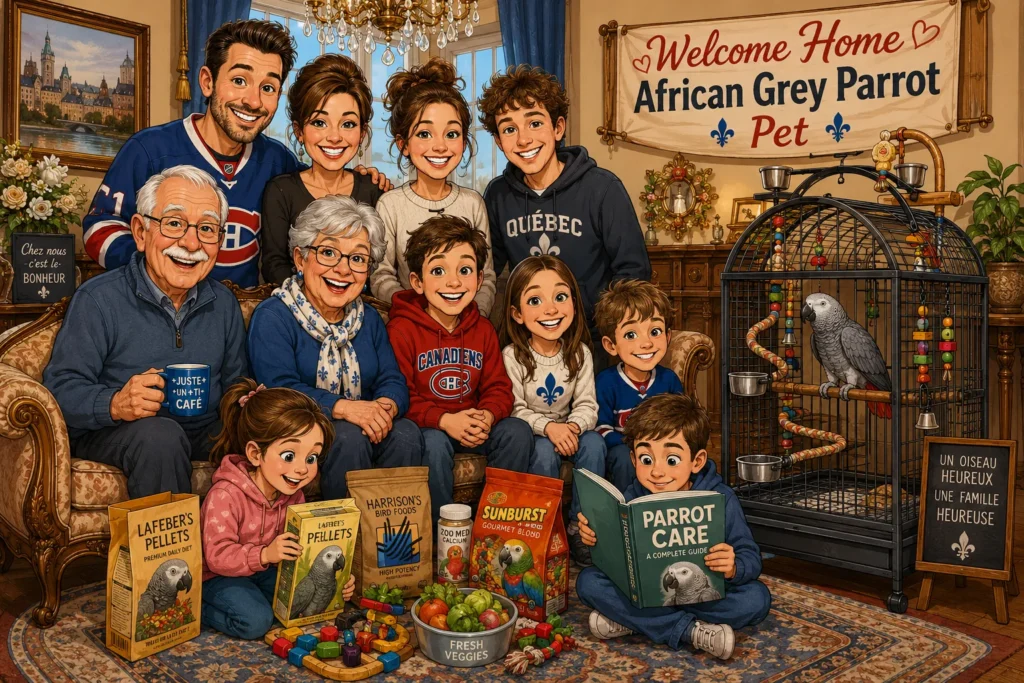
African Grey Parrot as a Pet
Considerations before Commitment
Before purchasing an African Grey Parrot, understand that they are among the most intelligent and demanding companion birds.

- Housing and Space Necessary
For your Pet African Grey Parrot
A proper setup cage setup must include:
- A large cage with room to climb and spread wing\
- Rotating toys and puzzle feeders
- Bird-safe play areas
- Safe air quality
Birds are highly sensitive to airborne toxins – common household dangers include:
- Non-stick cookware fumes
- Aerosol sprays
- Scented candles
- Smoke
- Some cleaning chemicals
Household sanitation is a necessity to avoid creating an illness in your Pet Arican Grey Parrot.
- Diet Requirements
For your Pet African Grey Parrot
African Greys require a balanced diet:
- High-quality pellets
- Fresh vegetables
- Limited fruit
- Calcium support
- Occasional seeds or nuts as treats
Seed-only diets often lead to serious health problems.
- Mess and Destruction
Created by your Pet African Grey Parrot
Parrots are incredibly messy birds by nature:
- Food throwing
- Feather dust
- Chewing furniture and wood
- Droppings outside the cage
African Greys also produce fine feather dust that may bother people with allergies or asthma.
- Noise Level – Can Be Loud
Created by your Pet African Grey Parrot
While not always as loud as some large parrots, African Greys can still:
- Scream unexpectedly
- Mimic alarms, phones, and household sounds
- Mimic phones
- Mimic many household sounds
- Vocalize at dawn and dusk
Apartment living or noise-sensitive households can become difficult, especially for neighbours.
- Intelligence and Emotional Needs
For your Pet African Grey Parrot
African Greys are exceptionally intelligent and emotionally sensitive – they often develop:
- Large vocabularies including sometimes embarrassing words/statements
- Problem-solving abilities
- Strong bonds with owners
- Emotional dependency
Without enough stimulation and social interaction, they may develop:
- Feather plucking
- Anxiety
- Screaming
- Aggression
- Depression-like behavior
They are not low-maintenance “cage pets.” – African Grey Parrots need daily engagement.
- Your Time Requirements
For your Pet African Grey Parrot
African Greys are intelligent and need:
- Several hours of social interaction daily
- Supervised out-of-cage time
- Training and enrichment
- Frequent cleaning
A bored African Grey Parrot can become extremely destructive or aggressively emotionally distressed.
- Lifespan and Commitment
For your Pet African Grey Parrot
African Grey Parrot can live 40–60 years or more with proper care:
Questions you must consider before commitment:
- Who will care for the bird during vacations or emergencies?
- Could you still care for it years from now?
- Are you prepared for veterinary expenses over decades?
Buying one is often a lifetime responsibility that may outlast jobs, homes, relationships, and even retirement plans.
- Veterinary Care
For your Pet African Grey Parrot
You must have access to and a relationship with a Specialist Avian Veterinarian.
- Annual wellness exams
- Emergency care
- Blood testing
- Specialized nutrition
- Nail and beak maintenance
Emergency Specialized Bird Veterinary care is expensive.
- Children and Other Pets
Interaction with your Pet African Grey Parrot
Parrots and children require constant supervision when together.
- Birds can bite hard when frightened or over stimulated
- Other household pets such as cats and dogs can also pose risks to parrots
Introduce new people to your African Grey Parrot slowly and respectful of your African Grey Parrot’s emotions.
Ethical and Adoption Considerations
For your Pet African Grey Parrot
Many parrots are re-homed because owners underestimate the commitment. Before buying:
- Consider adoption from a bird rescue
- Spend time around parrots first
- Research breeders carefully
An African Grey may be a good fit if you:
- Enjoy daily interaction and training
- Have stable routines
- Can tolerate noise and mess
- Want a long-term companion animal
It may be a poor fit if you:
- Travel frequently
- Want a quiet or independent pet
- Have limited free time
- Expect a cuddly bird at all times
Before You Decide Consider:
A good next step is visiting:
- An avian rescue
- A reputable breeder
- A bird club or parrot sanctuary
Ask question and listen intently to other pet African Grey Parrot owners.
You must consider:
Buying one is often a lifetime responsibility that may outlast jobs, homes, relationships, and even retirement plans.
Your Pet Canar African Grey Parrot
will give You
Activity and Friendship
Your Emergency Photos/Video on
PeTrackers.com
Made finding your Lost African Grey Parrot
Quicker and Easier to Find
And Happily Return to You!