



Dog Surfing
Preparing for Competition
Preparing a pet Dog for a surfing competition should focus on water confidence, board control, safety, fitness, and keeping the experience enjoyable.
- Is Your Dog a Water-Enjoying Dog
Dog Surfing
- Before introducing surfing to your pet dog should be:
- comfortable swimming
- entering the water voluntarily
- Begin building your pet Dog’s confidence:
- Start in calm, shallow water
- Never drag, push, or throw a reluctant dog into the water
- Some excellent Dog swimmers simply don’t enjoy waves
- Reluctant pet Dogs should never be pressured into competing
- Veterinary Fitness Check
Dog Surfing
Before serious training – particularly for an older dog – or a dog with previous injuries:
- Have a Veterinarian confirm that your Surfing Dog’s joints
- Have a Veterinarian confirm that your Surfing Dog’s heart
- Have a Veterinarian confirm that your Surfing Dog’s breathing
- Have a Veterinarian confirm that your Surfing Dog’s ears
- Have a Veterinarian confirm that your Surfing Dog’s skin
All the above must be in general condition and suitable for swimming and surfing.
- Choose a Suitable Surfboard
For Your Specific Pet Dog
Dog Surfing
A beginner Dog Surfer generally benefits from:
- A wide, stable, buoyant board
- Do not use a narrow performance board
- Your pet Surfer Dog requires enough room to stand naturally
- Your pet Surfer Dog requires enough room to reposition its feet
A traction pad or other secure, non-slip surface is especially important for your pet Surfer Dog because an ordinary surfboard surface can become extremely slippery under wet Surfer Dog paws.
- Teach Board Comfort
On Dry Land First
Dog Surfing
Introduce your potential Surfer Dog by:
- Putting your pet Dog’s new board on sand, grass or another stable surface
- Reward your Surfer Dog for approaching the new object
- Progress to putting two paws of your Surfer Dog on the surf board
- Climbing completely aboard the surf board
- Completely standing aboard the surf board
- Completely sitting aboard the surf board
- Remaining calmly aboard the surf board
Useful commands include:
- “board”
- “stay”
- “sit”
- “stand”
- “come”
- “off”
The goal is for your Surfer Dog to regard the surfboard as a familiar and rewarding place.
- Introduce Surf Board Movement Gradually
Dog Surfing
Once your Surfer Dog is comfortable on a stationary board:
- Gently rock the surf board
- Move the surf board
- Place the surf board in very shallow
- Place the surf board calm water
- Hold the surf board securely while your Surfer Dog learns that the surf board moves underneath your Surfer Dog’s feet
Gradually increase the movement rather than immediately taking your beginner Surfer Dog into breaking waves.
- Practice Your Surfer Dog’s Surfer Stance
Dog Surfing
Dogs naturally discover different surfing positions
- Some Surfer Dog stand facing forward
- Other Surfer Dogs prefer to sit
- Other Surfer Dogs prefer to crouch
- Other Surfer Dogs prefer to ride sideways
- Don’t force an unnatural posture
Encourage your surfer dog to:
- Keep your Surfer Dog’s weight relatively centered
- Keep your Surfer Dog’s and all four paws securely positioned
As confidence improves your Surfer Dog will learn to adjust your Surfer Dog’s body as the board accelerates or turns.
- Begin Your Surfer Dog’s Training
With Small Waves
Dog Surfing
- Choose small, gentle waves
- Have one trusted person steady the board
- Have another trusted person receives your Surfer Dog closer to shore
- The first few rides might only last a few seconds
Build from:
- dry board
- To shallow water
- To moving the surf board
- To tiny whitewater
- To small waves
- To longer rides.
Do not make a competition day your Surfer Board Dog’s first experience with surf conditions.
- Use a Properly-Fitted
Canine Flotation Device
Dog Surfing
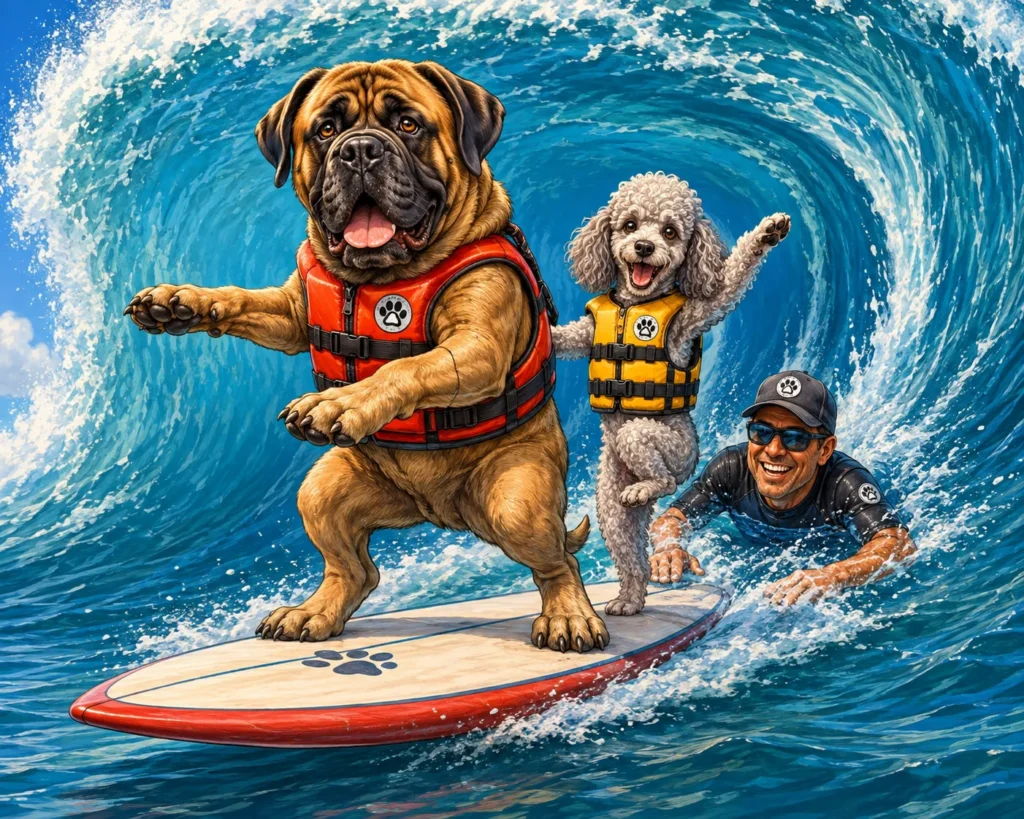
Even an excellent swimming dog should wear:
- A dog-specific flotation vest
- When appropriate for the Dog Surfing Competition
- Always wear a dog-specific flotation vest when in training conditions
- A secure handle on the back of the dog-specific flotation vest can make it easier to assist your Surfing Dog
Check the Dog Surfing Competition’s particular equipment rules beforehand because Dog Surfing Rules can vary between Sof Surfing competition events.
- Train your Pet Dog Surfer
For All Possible Surfing Conditions
Dog Surfing
Dog surfing requires more physical effort than it appears to:
- Swimming
- Walking,
- Controlled hill work
- Balance exercises can help develop endurance and core strength
- Training sessions should remain fairly
Several enjoyable short Dog Surfing training sessions are preferable to exhausting your Surfer Dog with one long session.
- Practice your Surfer Dog Falling Off
Dog Surfing
Falling into the water is a normal part of dog surfing:
- Your Surfer Dog should learn that falling off isn’t frightening
- Practice safe exits in calm water
- Teach your Surfer Dog to swim toward you
- Teach your Surfer Dog to swim toward shore
Never position yourself where the surfboard can be driven into you or your Surfing Dog by a wave.
- Rehearse Actual Dog Surfing Competition Conditions
Dog Surfing
Before the actual Dog Surfing Competition event expose your Surfing Dog gradually to things your Surfing Dog may encounter at a competition:
- Crowd noise
- Other dogs
- Loud speakers
- Cheering
- Photographers
- Tents
- Unfamiliar handlers
A Surfer Dog that surfs beautifully on an empty beach may behave very differently when surrounded by hundreds of spectators and excited dogs.
- Learn How the Dog Surfing Competition
Is Judged
Dog Surfing
Rules differ between Dog Surfing competitions, but judging may consider factors such as:
- Length of ride
- Wave size
- Quality of the wave
- Surfer Dog confidence
- Surfer Dog balance
- Surfer Dog positioning on the board
- Surfer Dog difficulty of wave
- Surfer Dog overall surfing performance
If tandem Surfer Dog/Human Handler multiple-dog surfing is offered, practice that configuration well in advance before entering your Surfer Dog.
A competition dog does not need to perform elaborate tricks—the strongest performances usually come from a dog that is relaxed, balanced, and comfortable riding the wave.
Your Emergency Photos/Video on
PeTrackers.com
Made finding your Lost Surfer Dog
Quicker and Easier to Find
And Happily Returned to You