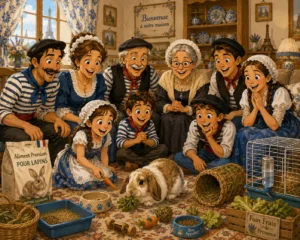





Rare Rabbit as a Pet
Considerations before Commitment
A Rare Rabbit should be chosen because of the Rare Rabbit’s temperament and care needs fit your family’s lifestyle – not simply because the Rare Rabbit is unusual or valuable.

- Why Choose a Rare Rabbit
Rare Rabbit as a Pet
Some families are attracted to uncommon breeds of Rare Rabbits because of the Rare Rabbits appearance, temperament, or heritage:
- English Angora Rabbit – famous for its long, luxurious wool that requires frequent grooming
- Harlequin Rabbit – known for its striking multicolored coat patterns
- Silver Fox Rabbit – valued for its calm temperament and unique fur texture
- American Chinchilla Rabbit – a heritage breed with beautiful silver-gray coloring
- Lionhead Rabbit – popular for its distinctive mane and friendly personality.
- Belgian Hare: Often called the “greyhound” of the rabbit world – Belgian Hare are exceptionally lean, long, and elegant – Belgian Hare are highly active, fast, and prized by experienced owners
- Blanc de Hotot: Known for their entirely white coats punctuated by distinctive black rings around their eyes. This French breed is calm, curious, and makes a wonderful, docile house pet. [1, 2]
- Checkered Giant: A massive, Europe-native breed known for striking “racing stripes” or a butterfly-like pattern along the nose and a solid dark spine – Blanc de Hotot need large enclosures and plenty of room to roam
These Rare Rabbit breeds often have higher purchase prices – and require specialized care and grooming.
- Housing and Habitat
Rare Rabbit as a Pet
Rare Rabbits are highly active and social, thriving best as indoor pets with ample space:
- Enclosure Size Rare Rabbit as a Pet:
- Traditional small cages are often too cramped
- A large exercise pen or a custom-built – predator-proof – enclosure
- Enclosure size at least 36 inches high – so your Rare Rabbit can’t jump out – is highly recommended
Litter Training Rare Rabbit as a Pet
- Rare Rabbits can be easily litter trained
- Use a low-backed cat litter box
- Use a safe, plant-based litter like shredded paper
- Use a safe, plant-based litter like or wood pellets
- Never use clumping clay or wood shavings
Floor and Hideouts Rare Rabbit as a Pet
- Provide a fleece blanket to prevent sore hocks on wire or hard floors
- Provide a rug to prevent sore hocks on wire or hard floors
- Always include a cardboard box or tunnel for hiding
Whether you have a Rare Rabbit breed or a common one – all domestic rabbits share identical core husbandry needs – the most critical step is ensuring a spacious – safe indoor environment – a constant supply of grass hay – and unlimited access to clean water.
- Food and Diet
Rare Rabbit as a Pet
A Rare Rabbit’s proper digestive tract relies almost entirely on constant grazing:
- Hay for your Rare Rabbit – 80% of diet: Unlimited amounts of high-quality grass hay – Timothy – Orchard – Oat hay
- Hay must be available 24/7.
2 This keeps their teeth filed down – and their digestion moving
- Pellets for your Rare Rabbit for your Rare Rabbit – 10-15% of diet:
- Use high-quality Timothy hay-based pellets
- Serve pellets sparingly: about 1/4 cup per 4 lbs. of body weight daily]
Fresh Greens for your Rare Rabbit – 5-10% of diet):
- Provide fresh dark leafy greens – like romaine lettuce, – cilantro – or parsley
- Serve at about 1 cup per 4 lbs. of body weight. Never feed iceberg lettuce
Rare Rabbit breeds are often beautiful and unique – however Rare Rabbits still need the same daily care – attention – proper housing – feeding – watering – as any other rabbit.
- Water Requirements
Rare Rabbit as a Pet
Rare Rabbits drink surprisingly large amounts of water – roughly as much as a medium-sized dog – to process all that dry hay feed.
- Bowls vs. Bottles for your Rare Rabbit:
- While water bottles work for water for pet Rare Rabbits
- Studies show rabbits actually prefer and drink more from heavy, tip-proof ceramic bowls
- Accessibility for your Rare Rabbit:
- Always provide fresh water daily
- Always ensure the water doesn’t spill
- Always ensure the water doesn’t get filled with hay
- Important Considerations
Before Purchasing or Adopting
Rare Rabbit as a Pet
- Grooming Needs for your Rare Rabbit:
- Fancy breeds like the Angora or long-haired Lionhead require a substantial time commitment
- For brushing
- For coat maintenance
- Specialized Diet and Space for your Rare Rabbit:
- Giant breeds eat much more
- Giant breeds need reinforced hutches
- Giant breeds need designated – chew-proof indoor enclosures. [1]
- Exotic Veterinary Care for your Rare Rabbit :
- Because Rare Rabbit breeds are uncommon
- You may need to locate an Exotic Animal Veterinarian
- A Exotic Animal Veterinarian who is specifically trained to handle Rare Rabbits unique health needs
Purchasing a Rare Rabbit can be a wonderful experience for a young family, but it requires careful planning and a commitment that may last 8 -12 years
- Questions to Ask
Before Purchasing or Adopting
Rare Rabbit as a Pet
Before bringing a Rare Rabbit home – discuss these questions as a family:
- Can we provide daily care every single day for a Rare Rabbit
- Are the children old enough to handle a Rare Rabbit gently and quietly
- Can we afford Rare Rabbit Veterinary care – food – bedding – emergency expenses
- Do we have enough space for a Rare Rabbit large exercise area
- Who will care for the Rare Rabbit during vacations?
- Buy from Responsible Breeders
Rare Rabbit as a Pet
Choose Rare Rabbit Breeders who:
- Allow you to see the Rare Rabbit’s living conditions
- Explain the Rare Rabbit breed’s health concerns and temperament
- Provide Rare Rabbit health records and Rare Rabbit feeding information
- Socialize young Rare Rabbit with gentle handling
- Answer Rare Rabbit questions even after the purchase
Avoid a Rare Rabbit impulse purchase at fairs or from sellers who cannot explain the Rare Rabbit’s background.
Families that research the Rare Rabbit breed carefully – prepare a spacious home – involve children in daily care – often enjoy many happy years with these intelligent and affectionate family pets.
Your Emergency Photos/Video on
PeTrackers.com
Made it Easier to Find
And Quicker to Reunite
Your lost Pet Colourful Rare Rabbit
To You Safely