



Degus as a Pet
Considerations before Commitment
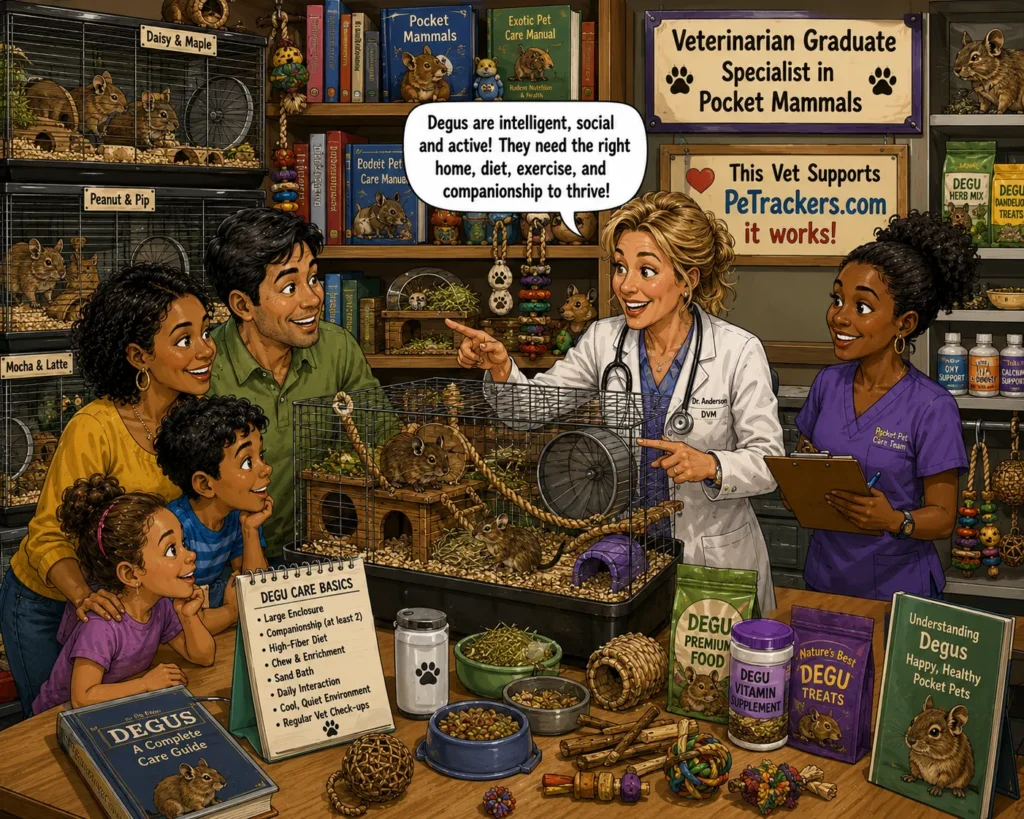
Degus (Octodon degus) are intelligent, curious rodents from Chile – Degus can/may become friendly, recognize their caregivers, learn routines, and remain active during much of the day – however Degus are more demanding than many pocket mammals and should not be considered inexpensive, low-maintenance “starter pets.”

- Housing and Habitat
Degus as a Pet
- Minimum Size Housing Degus as a Pet:
- At least 28″ L × 18″ W × 28″ H for two Degus
- Cage Type Degus as a Pet:
- Degus require chew-proof wire cages
- Degus require solid floors are best
- Avoid plastic bases – Degus will chew through plastic
- Housing setup Degus as a Pet
- Include multi-levels
- Include hiding boxes
- Include untreated wooden branches for climbing
- Include a running wheel – minimum 12″ diameter for Degus adults
- Multiple solid levels rather than exposed wire flooring
- Deep low-dust paper bedding
- Several wooden shelters and sleeping areas
- Natural untreated branches and safe wooden chew items
- Tunnels, platforms, ropes, and climbing opportunities
- A large, solid-surface exercise wheel—never a wire wheel
- Separate feeding locations
- More than one water source where practical
- Regular opportunities to dig and forage
- A safe sand bath intended for chinchillas or degus
- Bedding Degus as a Pet:
- Dust-free shredded paper
- Aspen bedding for digging
- Dust Bath Degus as a Pet:
- Provide a shallow bowl with degu-safe dust – chinchilla dust
- Provide 2-3 times a week to keep Degus coats clean
- The Degus cage should be:
- In a quiet family area
- Where the Degus receive attention
- Where the Degus are protected from shouting
- Where the Degus are protected from constant handling
- Where the Degus are protected from dogs
- Where the Degus are protected from cats
- Where the Degus are protected from direct sunlight
- Where the Degus are protected from drafts
- Where the Degus are protected from radiators
- Where the Degus are protected from kitchen fumes
Degus can overheat easily – the Degus enclosure should remain in a cool part of the home.
- Diet Requires Special Attention
Degus as a Pet
Degus need a very high-fibre low-sugar diet – Ask an Exotic-animal Veterinarian to review the exact pellet brand – and fresh-food plan – before bringing the degus home – Degus basic food should include:
- Unlimited fresh grass hay – such as Timothy or meadow hay
- A measured amount of quality degus-specific pellets
- Fresh clean water available continuously
- Suitable leafy plants
- Suitable herbs
- Suitable or vegetables in carefully selected amounts
Avoid routine feeding of:
- Fruit
- Dried fruit
- Honey sticks
- Yogurt drops
- Sweetened treats
- Molasses-containing food
- Sugary breakfast cereals
- Cookies or other human snack foods
- Large amounts of seeds or nuts
Degus are particularly susceptible to diabetes and obesity – hence sweet treats that appear harmless can create serious Degus health problems.
- Water Access
Degus as a Pet
- Water always Available:
- Fresh water
- Clean water
- Must be accessible 24/7
- Water Dispenser:
- Use a sturdy hanging water bottle
- Use a heavy ceramic bowl attached to the cage
- To prevent spillage and contamination
- Never Plan on Only One Degus
Degus as a Pet
Degus are highly social animals and should normally live with compatible degus of the same sex – ideally an already-bonded pair or small Degus group – a Degus owner/person cannot replace the constant companionship, communication, grooming, and sleeping contact another degu provides.
A family should usually adopt:
- Two bonded Debus males
- Two bonded females
- An established compatible group
Warning: do not casually place unfamiliar adult degus together – introductions may need to be gradual – fighting can cause serious injuries.
- Degus are Not Cuddly Toys
Degus as a Pet
Many Degus become tame, interactive, and interested in people, but Degus often prefer climbing onto a person voluntarily rather than being picked up and carried.
Never lift, pull, restrain, or catch a Degus by its tail:
- The Degus tail skin can be severely injured
- The Degus tail skin can detach and will not grow back normally
- The Degus tail skin can be severely injured or detach and will not grow back normally
- Young children may find them too quick and delicate to handle safely
- Children should sit on the floor during interaction and allow the Degus to approach them
- Degus may bite if frightened – grabbed – cornered – awakened abruptly
- Daily Work and Enrichment
Degus as a Pet
Degus are clever and energetic – a cage containing only food, water, and a wheel will not provide enough stimulation.
Every day, the family should expect to:
- Refresh hay and water
- Remove wet bedding and spoiled food
- Check that both Degus are eating and behaving normally
- Provide safe chewing materials
- Hide some food in hay or safe enrichment toys
- Offer supervised interaction
- Observe their teeth
- Observe their eyes
- Observe their feet
- Observe their coat
- Observe their breathing
- Observe their movement
Rotate tunnels, cardboard boxes, branches, safe wooden toys, and foraging activities – do not completely redesign the cage every day – familiar scents and sleeping areas can provide security.
7.. Veterinary Care can be Difficult to Find
Degus as a Pet
Before adopting a Degus locate an Exotic-animal Veterinarian who regularly treats Degus.
- Potential Degus health concerns include:
- Dental overgrowth or painful dental disease
- Diabetes
- Cataracts
- Weight loss or obesity
- Respiratory illness
- Digestive problems
- Foot sores
- Skin problems
- Injuries from fighting
- Heat stress
- Because Degus may hide:
- Illness
- Reduced eating
- Drooling
- Wet fur around the mouth
- Unusual quietness
- Breathing difficulty
- Diarrhea
- Sudden weight loss
- Changes in drinking
A small digital scale is useful – weigh each Degus regularly – keep a written record – unexplained weight loss – may be an early warning sign.
- Expect a Long Commitment
Degus as a Pet
Degus commonly live approximately five to eight years – although lifespan varies with genetics – diet – housing – Veterinary care.
Before adopting, your pet Degus ask:
- Will our family still have the time
- Will our family still have the money
- Will our family still have the suitable housing
- Will our family still have the interest to care for both degus many years from now
- Also plan for vacations
A knowledgeable caregiver must check them daily – leaving Degus extra food and water for several days is unsafe.
- Degus can be Messy and Destructive
Degus as a Pet
- Degus Owners must expect:
- Hay around the cage
- Bedding scattered onto the floor
- Frequent chewing
- Dust or sand near the enclosure
- Occasional food throwing
- Vocal squeaks chirps and cage activity
During Degus supervised exercise owners must protect:
- Electrical cords
- Furniture
- House plants
- Base boards
- Carpets
- Small openings.
A Degus can disappear behind furniture surprisingly quickly.
- Children’s Responsibilities
Degus as a Pet
- Children can help with:
- Refilling Degus hay under supervision
- Preparing Degus enrichment activities
- Speaking gently near the Degus enclosure
- Watching and recording Degus behaviour
- Helping with Degus feeding after an adult measures the food
- Checking Degus water bottles with an adult
Adults should remain responsible for:
- Veterinary care
- Diet decisions
- Cage cleaning
- Safe handling
- Temperature control
- Preventing escapes
- Paying ongoing expenses
A child losing interest must never result in reduced care.
Family Suitability
Degus as a Pet
- A Degus pair may be a good choice if:
- Your family wants intelligent active animals
- To observe
- To gently interact with
- Your family has room for a large enclosure
- Your family accepts several years of care
- Your family can maintain a strict low-sugar diet
- Your family has access to an experienced Exotic-animal Veterinarian.
- Degus may not be suitable if:
- Your children primarily want a pet to carry
- Your children primarily want a pet cuddle
- Your family wants only one animal
- The home becomes very hot
- The space is limited
- Adults expect children to manage the pets independently
- Before purchasing a Degus as a Pet:
- Visit a reputable rescue
- Visit an experienced degu caregiver
- Observe adult degus
- Learn how noisy and messy Degus are
- Observe a properly equipped enclosure
- Handle a Degus under supervision
Whenever possible, adopt an already-bonded Degus pair rather than buying a single Degus.
Your Emergency Photos/Video
You Instantly Released on
Petrackers.com
Made Finding your Pet Degus
Quicker and Easier to Find
And Happily Return to You!