



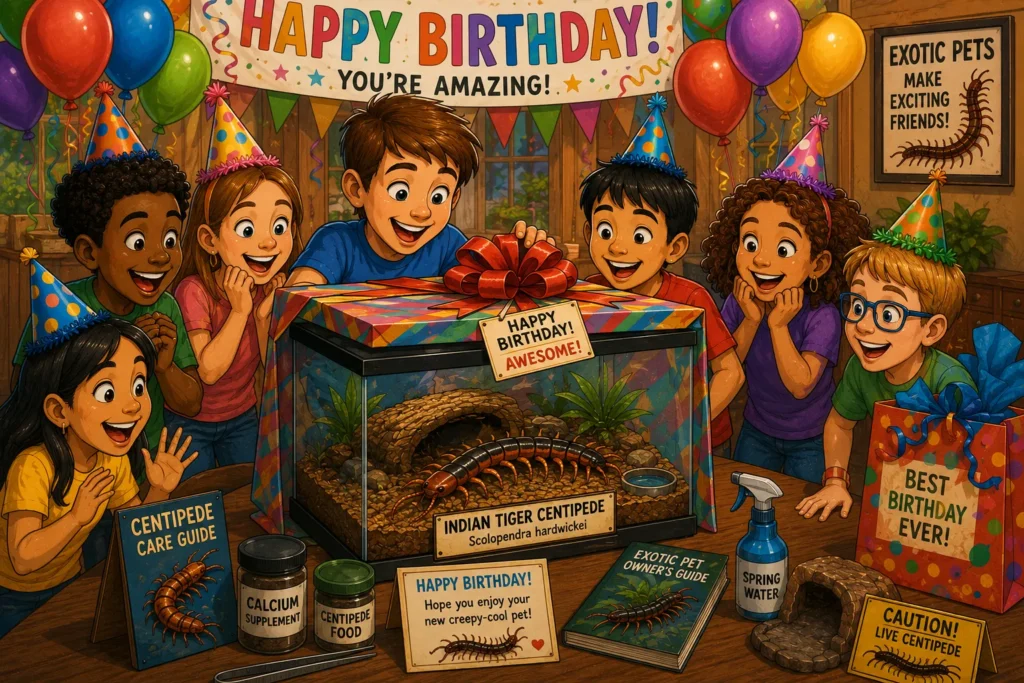
Centipede as a Pet
Considerations before Commitment
Because Centipedes are strictly display-only animals that cannot be handled, require live insect diets, and are escape artists, most experts recommend them only for highly experienced invertebrate keepers.

- Centipedes are Aggressive & Venomous
Centipede as a Pet
Centipedes are highly ill-tempered:
- Centipedes have no problem biting if they feel cornered
- Centipede bites are intensely painful
- Centipede bites are often compared to a severe bee sting
- Centipede bites are often compared to a scorpion sting
- Centipede bite can cause swelling
- Centipede bite can cause localized burning
While Centipedes make fascinating display pets for experienced keepers, Centipedes are not recommended for handling due to Centipedes incredibly painful, venomous bites and aggressive feeding responses.
- Housing Requirements
Centipede as a Pet
The Enclosure for your Centipede as a Pet
- Centipedes are strong
- Centipedes can squeeze through tiny gaps
- Centipedes can pop doors open
- Centipedes chew through softer plastics
- Use a tall glass terrarium with a specialized sliding/locking lid
Many Centipede pet keepers use custom enclosures with padlocks to ensure absolute security.
- Dimensions for enclosure for your Centipede as a Pet:
- Aim for an enclosure that is at least twice as long as your centipede
- Aim for an enclosure that is at least twice as twice as high as your centipede
- Substrate and Hides for enclosure for your Centipede as a Pet:
- Provide 4 to 5 inches of a moisture-retaining, organic substrate
- Like a 50/50 mix of coco fiber and soil or sand
- So your centipede can burrow
- Add flat cork bark or pieces of wood on the surface
- So they have a place to hide when they aren’t underground
Avoid anything with fertilizer.
- Temperature and Humidity for enclosure for your Centipede as a Pet:
- Most Centipede species thrive in warm conditions
- Most Centipede species thrive in humid conditions
- Use a side-mounted terrarium heating pad – never on the bottom – to maintain a warm ambient temperature around 24 to 29°C (75 to 85°F)
- Water Requirements
Centipede as a Pet
1. Hydration for your Centipede as a Pet
- Centipedes absorb moisture through their skin and spiracles/breathing holes
- Always provide a shallow dish of clean fresh water
- if the centipede is small – place pebbles or a sponge in the bowl – to prevent it from drowning
- Misting for your Centipede as a Pet:
- Maintain a humidity level of about 75% to 85%
- By misting one side of the enclosure weekly – or as the substrate dries out
- Proper ventilation is critical
- Stagnant – over-misted air – can cause fatal fungal infections (mycosis)
- Food Requirements
Centipede as a Pet
As apex predators – Centipedes eat a variety of live insects.
- Diet for your Centipede as a Pet:
- Centipedes are strict carnivores
- Feed your pet Centipede a diet of live gut-loaded insects – crickets – dubia roaches – mealworms – super-worms
- Large adult centipedes can occasionally take appropriately sized frozen-thawed pinkie mice
- Frequency and Maintenance for your Centipede as a Pet:
- Feed adult centipedes once or twice a week
- When your pet Centipede emerge to hunt
- Always remove uneaten prey and debris from the enclosure
- Within 12 to 24 hours to prevent mold and bacteria
Larger Centipede specimens can even eat small rodents.
- Are Centipedes Good Family Pets
Centipede as a Pet
Centipedes can be fascinating creatures, but they differ greatly from traditional family pets.
- Advantages for your Centipede as a Pet:
- Centipedes require relatively little space
- Centipedes do not need daily walks or constant attention
- Centipedes are interesting to observe – especially their hunting behavior
- Centipedes can encourage children to learn about invertebrates and ecosystems
- Disadvantages for your Centipede as a Pet:
- Many Centipedes species possess venom and can deliver painful bites
- Centipedes are fast, secretive, and can escape through very small openings
- Centipedes are secretive
- Centipedes can escape through very small openings
Caution – some large tropical Centipede species can be aggressive when disturbed – younger children may accidentally injure the animal or get bitten.
- Safety First
Centipede as a Pet
If you decide to keep a Centipede as a family pet:
- Teach children that the pet is for watching – not handling
- Always have an adult feed or clean the enclosure
- Use a secure terrarium with a tightly fitting lid
- Never leave the enclosure open when children are nearby
- Always wash hands after any work inside the habitat
For most families with young children, gentler invertebrates such as millipedes, stick insects, or hissing cockroaches are usually safer and more interactive choices.
- Teaching Opportunities
Centipede as a Pet
With proper supervision, children can learn about:
- Arthropod anatomy
- Predators and food chains
- Moulting and growth
- Habitat conservation
- Respecting animals that should be observed rather than handled
These lessons can help children appreciate wildlife while understanding that not every animal is a cuddly companion.
- A Better Choice for Younger Children
Centipede as a Pet
If your children want an invertebrate they can observe more safely – consider:
- Indian Walking Stick
- Madagascar Hissing Cockroach
- Giant African Millipede
These animals are generally slower, less defensive, and better suited to family environments than most centipedes.
A centipede can be an excellent educational display animal for older, responsible children and teenagers, but for most young families, a gentler invertebrate is usually the better first choice.
Your Emergency Photos/Video on
PeTracker.com
Made finding your Lost/Escaped
Centipede
Quicker and Easier to Find
And Happily Returned to You