Orangutan as a Pet
Considerations before Commitment
PeTrackers.com
Keeping an Orangutan as a pet is a very bad idea for nearly everyone — not because they are “bad” animals, but because they are highly intelligent, powerful, endangered wild apes with needs that no normal household can realistically meet.
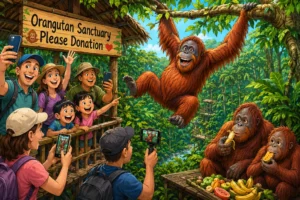
- Orangutans are not Domesticated
Orangutans are Wild Great Apes
Baby Orangutans are cute and affectionate – when mature an Orangutan becomes:
- Extremely strong – stronger than most potential owners
- Orangutans are wild great apes are an emotionally complex animal
- Orangutans are very unpredictable
- Orangutans are extremely territorial
- Capable of causing severe injury unintentionally or intentionally
- An adult male can easily overpower several adults.
An adult male can easily overpower several adults.
- Orangutans are Enormously Emotional
Orangutans are among the most intelligent animals on Earth. They require:
- Constant mental stimulation
- Large climbing environments
- Social interaction suited to ape psychology
- Specialized enrichment every day
Without this attention, Orangutans often develop:
- Depression
- Self-harming behaviour
- Aggression
- Destructive habits
Many privately owned apes end up isolated in cages once they become too strong to safely handle.
- Orangutans are Surprisingly Expensive
Proper Orangutan care can cost tens of thousands of dollars per year, including:
- Specialized diets
- Veterinary care from exotic animal specialists
- Massive secure enclosures
- Structural reinforcement
- Insurance and permits
A highly specialized Ape Veterinarian is needed for proper Orangutan health care and advice.
- Orangutan to Human
Possible Disease Transmission
Because orangutans share approximately 97% of their DNA with humans, diseases can easily pass both ways:
- Respiratory illnesses
- Malaria
- Tuberculosis
- Hepatitis B
- Gastrointestinal Parasites
Transmission between Orangutans and Humans occurs:
- Direct contact – physical contact without protective equipment
- Indirect contact – sharing food, sharing water source, leaving infectious droplets around forest and sanctuaries
- Vector-Mediated – mosquitoes’ transmissions
Transmission Prevention of disease transfer:
- Mandatory protective gear
- Strict Quarantine when necessary
- Social Distancing – buffer zone between Orangutans and tourists
Cleanliness and following rules about Orangutan contact is improve to avoid disease transmission.
- Legal and Ethical Problems
Orangutan Private Ownership
In many places, owning an orangutan is illegal or heavily restricted because they are endangered:
- Babies are often taken after their mothers are killed
- Smuggling and illegal wildlife trafficking are common
- Many captive apes eventually end up abandoned or confiscated
The exotic pet trade has also contributed to severe suffering.
- Orangutan Ownership Alternative
If someone loves orangutans, better options include:
- Supporting accredited sanctuaries
- Visiting ethical wildlife centres
- Adopting symbolically through conservation groups
- Volunteering with wildlife conservation organizations
- Learning about rain forest conservation
You can admire and help protect Orangutan without trying to keep one in a home environment.
- Orangutan Ownership Reality
People often imagine a friendly ape companion from movies or viral videos. What those videos usually do not show is:
- The destruction of homes
- Injuries to owners
- Years of difficult care
- Emotional suffering of the ape
- The fact that many apes outgrow private homes and end up in sanctuaries
An orangutan belongs in a professionally managed sanctuary or protected natural habitat — not a living room.
Your Emergency Photos/Video on
PeTrackers.com
Made finding your Lost Escaped/Lost
Orangutan
Quicker and Easier to Find