


Falconry
Practice of Training
Birds of Prey
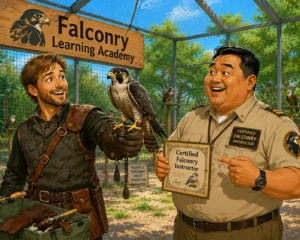
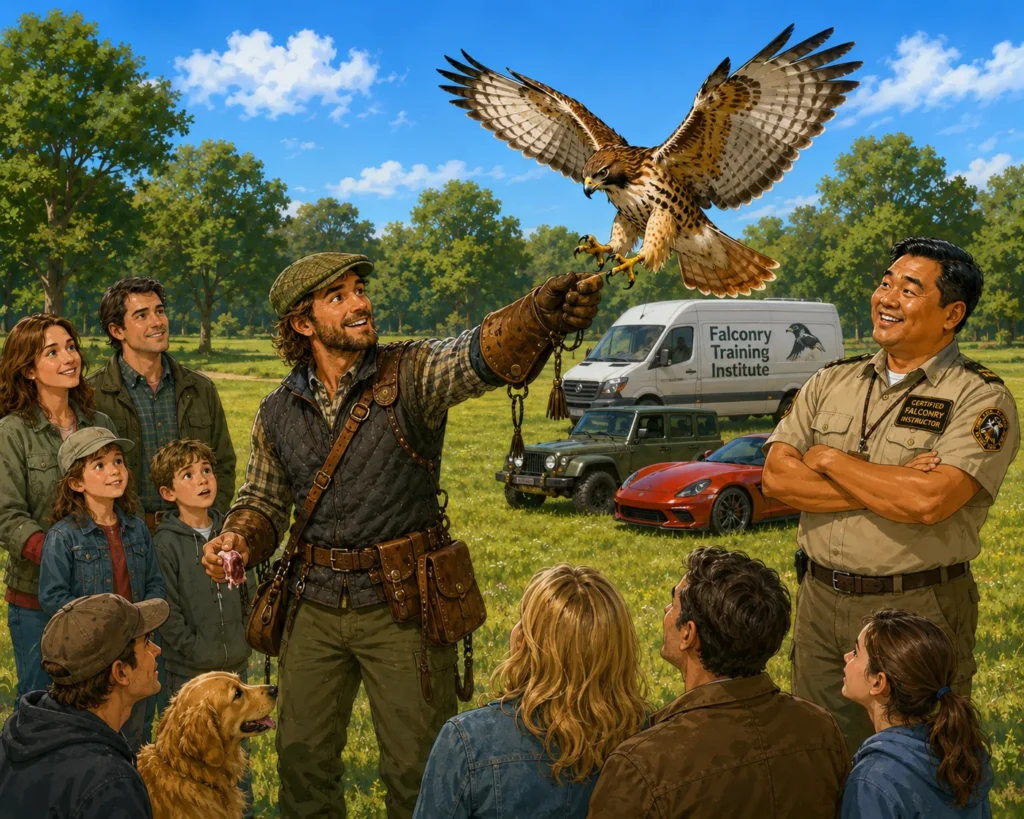
Falconry is the practice of training Birds of Prey – hawks, falcons, eagles – to hunt wild game in partnership with human handlers.

- A Bird-of-Prey
Is not a Pet
Different birds are used for different hunting styles and terrains:
- Peregrine Falcons
- Re-Tailed Hawks
- Harris Hawk
- Golden Eagle
A falconry bird remains a hunting animal with strong natural instincts.
- Falconry Daily Care
Bird of Prey
Falconry is a daily hobby:
- Fresh food – mice, quail, other whole prey
- Fresh water – drinking and bathing
- Housing cleanliness
- Flying time outside the enclosure
- Cleaning equipment
- Weight monitoring
- Daily health checks for injuries or parasites
Birds of Prey cannot be left alone for a weekend like smaller bird pets.
- Falconry Training Process
Bird of Prey
Bird of Pery falconry training relies on trust and conditioning not human dominate over bird – using common steps – example:
- The bird must become accustomed to human presence
- Teaching the bird to step onto the handler’s glove
- Recall training involves food rewards
- Begins flying short distances in enclosure
- Free flights outdoors practice
- Begin live game hunting in the field
Patience and consistency is needed.
- Falconry Specialized Protective Gear
For Trainers and Handlers
The necessary falconry gear includes:
- Proper-for-use heavy leather gloves
- Proper comfortable hoods for bird of prey
- Jesses – leg straps
- Lures
- Telemetry /GPS trackers
Handler and Bird of prey are paramount.
- Bird of Prey Handler
Falconer Apprenticeship Program
The Apprenticeship program includes:
- Safe handling of birds of prey
- Bird weigh management
- Conditioning and flight training
- Hunting techniques for your bird of prey
- Veterinary care
- Stress and injury prevention
Most falconers training period is 1-2 years apprenticing under a licenced expert falconer.
- Falconer and Bird-of Prey
A Hunting Partnership
It is bird-of-prey that chooses to return to the falconer – depending on:
- The bird must recognize the falconer as a reliable hunting partner
- Careful prior timing training and conditioning is essential
- The falconer must respect the bird-of-prey’s natural hunting instincts
Warning: a poorly treated bird-of-prey may just fly away to relieve the stress.
- Falconry is a Demanding Sport/Hobby
Falconry is demanding:
- Predator/Raptors remain a highly wild animal
- Falconry standards are necessarily/very strict
- The hunting commitment is constant/ongoing
- Laws are complex
- Specialized veterinarian bills are expensive
- Training mistakes can be dangerous for your bird-of-prey
Consider volunteering a a falconry facility.
- Falconry
Legal and Licensing Requirements
Many nations require bird-of-prey facilities inspection and permits including:
- Falconer passing written exams including raptor biology, laws and specific are needs
- Municipal building codes met for bird housing facilities (mews)
- Obtaining specialized equipment
- Serving and apprenticeship under a licenced falconer trainer/instructor
- Know national and local wildlife regulations
- Know proper hunting and breeding seasons
- Keep accurate records and permits for each bird-of-prey
Apprentices may be advised/regulated against starting with a large of endangered species.
- Falconry
The Ethical and Conservation Roles
Falconry organization support:
- Predator/Raptor preservation programs
- Habitat preservation for birds
- Captive breeding for endangered species
- Rehabilitation programs for injured birds
Falconry has deep historical roots dating back thousands of years and is recognized by UNESCO as an important cultural tradition.
Your Emergency Photos/Video on
PeTrackers.com
Made finding your Lost
Escaped Predator/Raptor
Quicker and Easier to Find