



Turtle as a Pet
Choosing Your First Pet Turtle
A Turtle for a pet is fascinating and have long life spans that comes with both a daily and long-term commitment

- Turtles have Long Lives
A Pet Turtle is Family Commitment
A common pet Turtle can live 20 – 40 years or even longer – consider:
- If you purchase a starter small turtle – turtles grow
- A larger tank enclosure will be necessary depending how big your pet Turtle grows
- An apartment/condo owner must consider the turtle may outgrow the limited space
- A pet Turtle can grow large enough to require a back garden/outdoor enclosure
Enquire from your certified Turtle sales individual a detailed explanation of your pet Turtle’s potential life span and possible needs.
- Housing and Environment
For your Pet Turtle
A proper setup for a pet Turtle is complicated and expensive.
- Moisture-dependant amphibians require specialized high-humidity terrarium (50-100% humidity
- Strong filtration system
- Clean fresh water access
- Small Enclosure causes stress and stunted-growth
- Unsuitable Substrate – impaction if ingested sand gravel
- Incorrect temperature – too hot/cold impairs metabolism
- Low humidity – dehydration skin issues
- Dehydration – fresh clean water daily
- Poor Ventilation – fungal/mould issues respiratory issues
- Inadequate Hiding Spots – stress and weakened immunity
- Branches for climbing
- Live/artificial plants for security
You must now consider ongoing Turtle costs – electricity, food and veterinarian expenses.
- Your Child/Children’s Turtle
What if They Lose Interest
Before purchasing a pet Turtle for your child/children consider:
- Will you the parent/guardian be interested in the Pet Turtle long-term
- Is your child/children/family used to routines already
- What about travel periods away
- Do o have space for a growing Turtles needs
- Are you prepared for the regular pet Turtle expenses
- Are you prepared for Exotic Pet Veterinarian expenses
A pet Turtle is a special pet to keep.
- Young Children Pet Turtle
Need Supervised Pet Turtle Handling
Turtles, and other reptiles, commonly carry salmonella bacteria even when they appear healthy.
- Always have individuals wash their hands after handling a pet Turtle
- Never kiss a pet Turtle
- Never cuddle a pet Turtle
- Clean tanks in designated area – not in the kitchen sink
- Keep pet Turtle away from food prep areas
Children especially very young children must be constantly supervised with your pet Turtle.
- Mental Health and Enrichment
For your Pet Turtle
A pet Turtle enrichment focuses on properly mimicking a Turtle’s natural habitats and behaviours.
- Sentient creatures – experience fear stress anxiety
- Social bonding territorial nature
- Avoid household toxins chemical
- Substrate – coconut-fibre sphagnum-moss peat-moss
- Aggression between tank mates
- Injury death
- Boredom – plants hiding spots climbing branches
- Nocturnal disturbances – light and noise sensitive
- Nocturnal to avoid predators
- Opportunity feeders
Turtles are extremely sensitive to chemicals and residues on human hands:
- Always wash your hands before handling your pet Turtle
- Preferably handle your pet Turtle with non-powdered, wet latex-free gloves on
Only use clean fresh water when misting your pet Turtle
A Good Rule to Consider
A pet Turtle should be purchased because the parent genuinely wants and totally accepts responsibility for the pet Turtle.
Your Pet Turtle will give You
Activity and Friendship
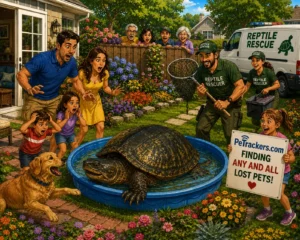
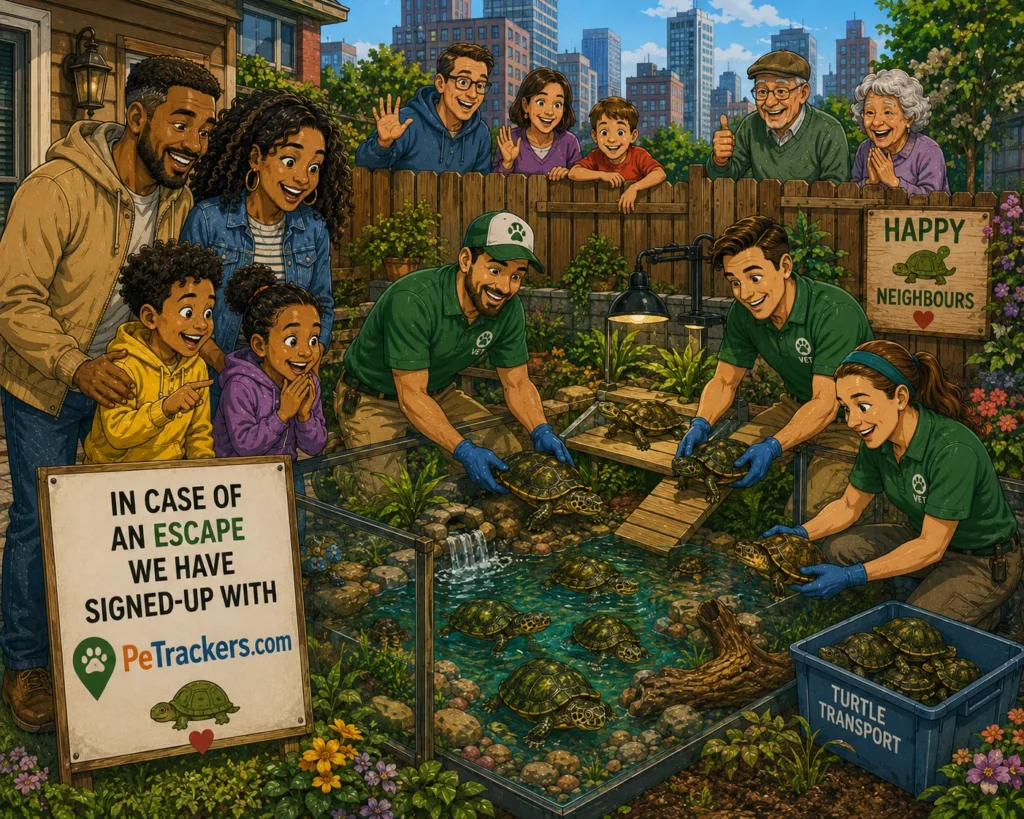
Your Emergency Photos/Video on
PeTrackers.com
Made finding your Lost Turtle
Quicker and Easier to Find
And Happily Return to You!